The short answer
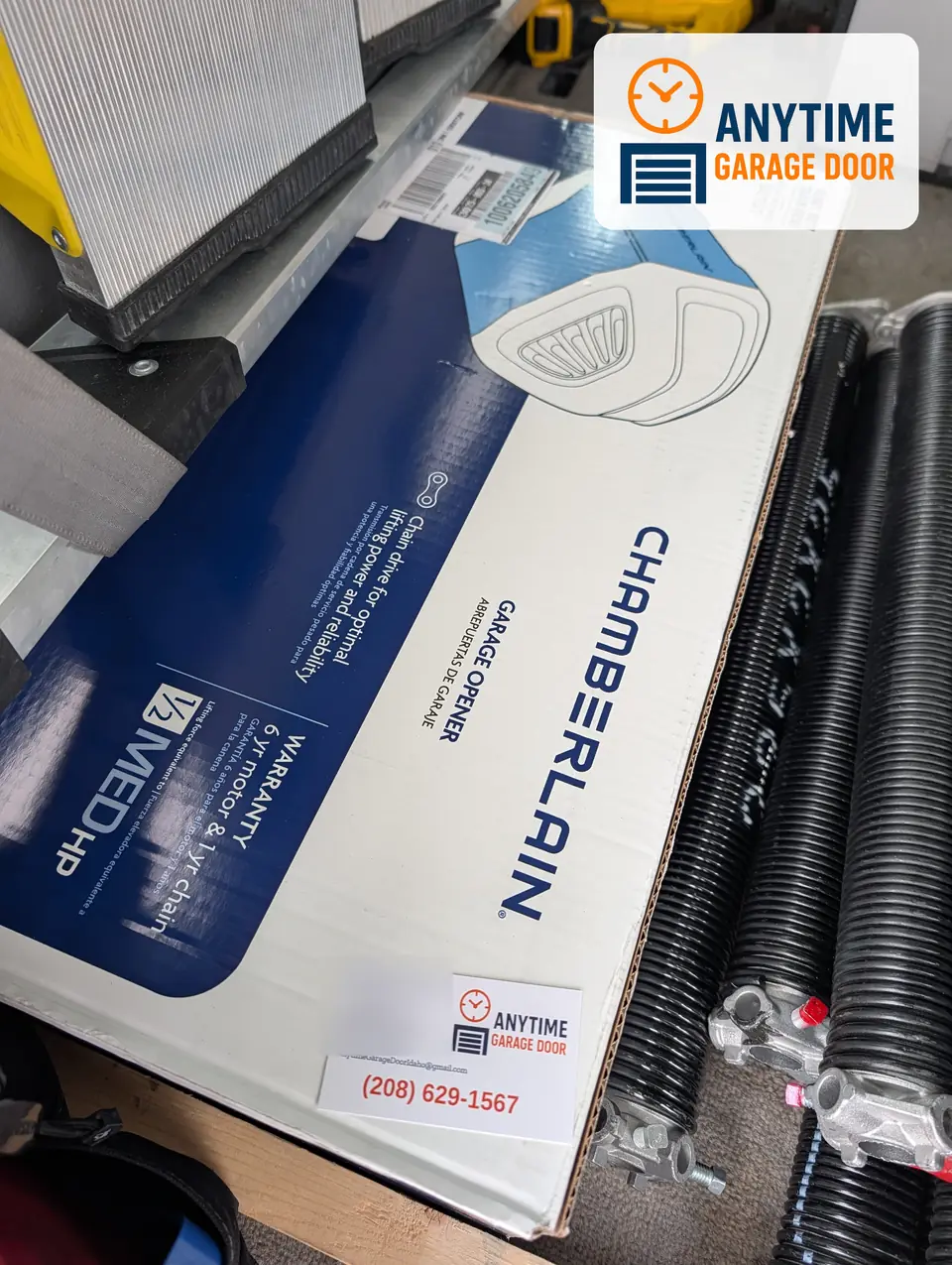
For an attached garage with rooms above it, a quiet belt drive is usually the right fit. For a detached garage or shop, a chain drive does the job.
Low ceiling, or a door tall enough for an RV or boat? Ask about a wall-mount unit. Then add only the extras you'll actually use.
One thing matters more than any of these: the springs lift the door, and the opener only steers it. Hang a new motor on a door that fights its springs and the motor pays for it on every trip, so we check the balance before any opener goes up.
Drive types compared
On a ceiling opener, the drive pulls a trolley along a rail, and the trolley pulls the door:
- Chain drive. A steel chain does the pulling. It's tough and simple but the noisiest of the three, so it suits a standalone garage or a shop out back.
- Belt drive. A reinforced belt replaces the chain, so the door rises with far less clatter. Choose it when bedrooms or living space share a wall or ceiling with the garage.
- Wall-mount. The motor bolts to the wall at the end of the torsion shaft and turns that shaft, so nothing runs overhead. It needs torsion springs and clear wall space next to the door.
Motor strength matters less than most people think. A balanced door of normal size doesn't need the biggest unit, though a heavy insulated double door or an RV door may need more power.
Noise: what actually makes a garage loud
The drive type sets a baseline, but much of the racket comes from the door itself: worn steel rollers, dry hinges and loose hardware. Quiet nylon rollers and a tune-up with fresh lubrication can quiet an older door, with or without a new opener.
Smart features and Chamberlain myQ
A connected opener links to your home Wi-Fi, so you can check, open and close the door by phone and get an alert when it moves. If you've ever been halfway down Karcher Road wondering whether you left the garage open, you'll see the appeal.
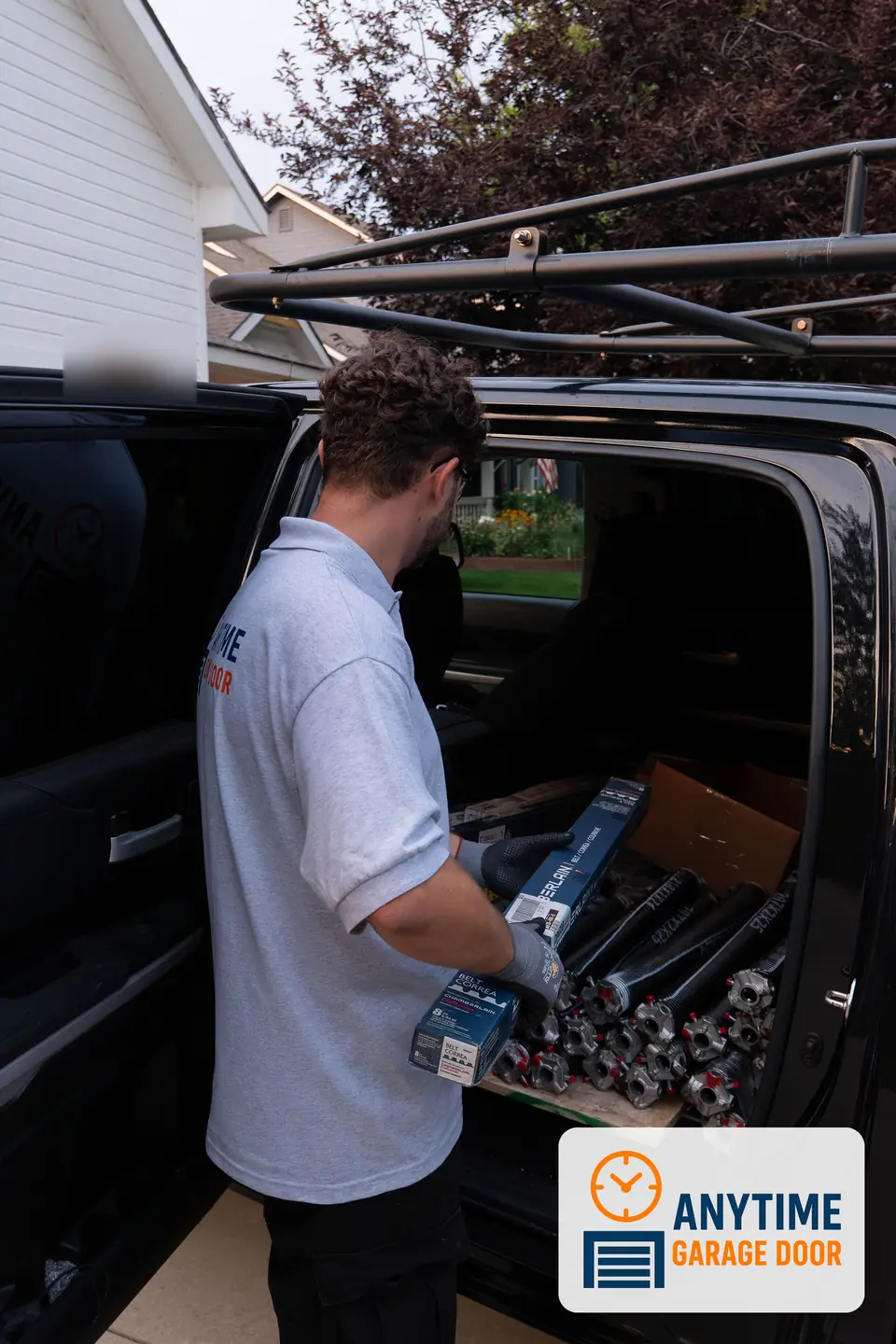
Chamberlain myQ openers and wireless keypads are on our trucks. Closing the door remotely, with nobody watching, relies on the safety sensors and auto-reverse, so our installs finish with a balance, sensor and auto-reverse test.
Battery backup
A battery backup keeps the opener running for a limited number of trips during an outage. That's handy when a windstorm takes the power out and the garage is how you leave for work.
Without backup, the red emergency release cord lets you move the door by hand. Pull it only while the door is fully closed, or while someone holds it steady, because if a spring has broken, a released door can fall fast. If the freed door feels far too heavy, leave it down and call us.
Keypads, remotes and wall controls
An outdoor wireless keypad opens the door with a code, handy for kids after school or a neighbor checking on the house. Give every driver a remote, and consider a wall control with a lock setting that shuts off remotes while you're away.
Safety features every opener needs
Whatever you choose, check for these:
- Safety sensors near the floor that reverse the door if something crosses the opening
- An auto-reverse that backs the door up if it touches an object on the way down
- Force settings matched to your door, so the opener never pushes harder than it should
- An emergency release you know how to use safely
If your opener was built without safety sensors, or still fails the auto-reverse test after the sensors and force are serviced, it's time to replace it.
Matching the opener to your garage
A few common Treasure Valley setups call for extra thought:
- Two or three doors. Each door gets its own opener, and they needn't match: a belt drive on the door by the bedroom, a chain drive on the workshop bay. Ask for remotes with a button per door.
- A detached garage or a shop on acreage. Stand at the door with your phone first. If it can't pick up your home Wi-Fi there, the app can't reach the opener either, and a keypad plus battery backup may serve you better.
- A tall RV or boat door. A taller door needs a longer rail, and a very tall one may leave no room overhead at all. That's where a wall-mount unit earns its place.
When the opener isn't the real problem
For fixes, see opener repair; for a new unit, opener installation explains the job. If yours quit without warning, start with our guide to a garage door that won't open.
A door that suddenly feels heavy, hangs crooked or stalls a few inches up usually has a broken spring or cable. It needs spring replacement or cable replacement, not a new opener. Until then, stop using the opener: each press makes the motor haul every pound of the door, straining it toward burnout, and the door can come down without warning.
And whatever you do, don't loosen, unwind or remove any spring, cable or bracket to take the strain off; that tension can hurt you badly. Keep children and pets well clear of the door, and never stand or walk under it while it's stuck partway or hanging crooked. Ready for an opener? Call (208) 629-1567 for a free quote.
How it works
- Tell us about your garageDescribe the door, what's above it and what you want.
- We check the doorA technician checks the springs and balance first.
- Choose your openerYou pick a model, with the price spelled out before we start.
- Install and programWe mount the opener and sensors, set the force, and program your remotes and keypad.
- Run it with youWe run the door while you watch, show it stopping for the sensors and backing off an obstacle, then sweep up.