
How can I tell a garage door cable is broken?
Check both lower corners of the door, where a cable attaches on each side. A snapped cable usually hangs loose or lies coiled on the floor. A slipped cable may still be attached at the bottom but has come off its drum at the top, hanging slack or tangled around the shaft.
The door shows it too. One side sits higher than the other, the door jerks or tilts as it moves, or it stops partway and won't close flat. Strands sticking out of a cable, like a frayed rope, mean it's close to failing.
Stop using the opener as soon as you notice any of this. A crooked door can bind in its tracks, and driving the motor against it can strain the opener or drop the door.
What the cables and drums actually do
Your springs store the lifting energy, but the cables do the actual pulling. As a torsion spring unwinds, it turns the shaft, the drums on each end wind up the cables, and the cables pull both bottom corners up at the same rate.
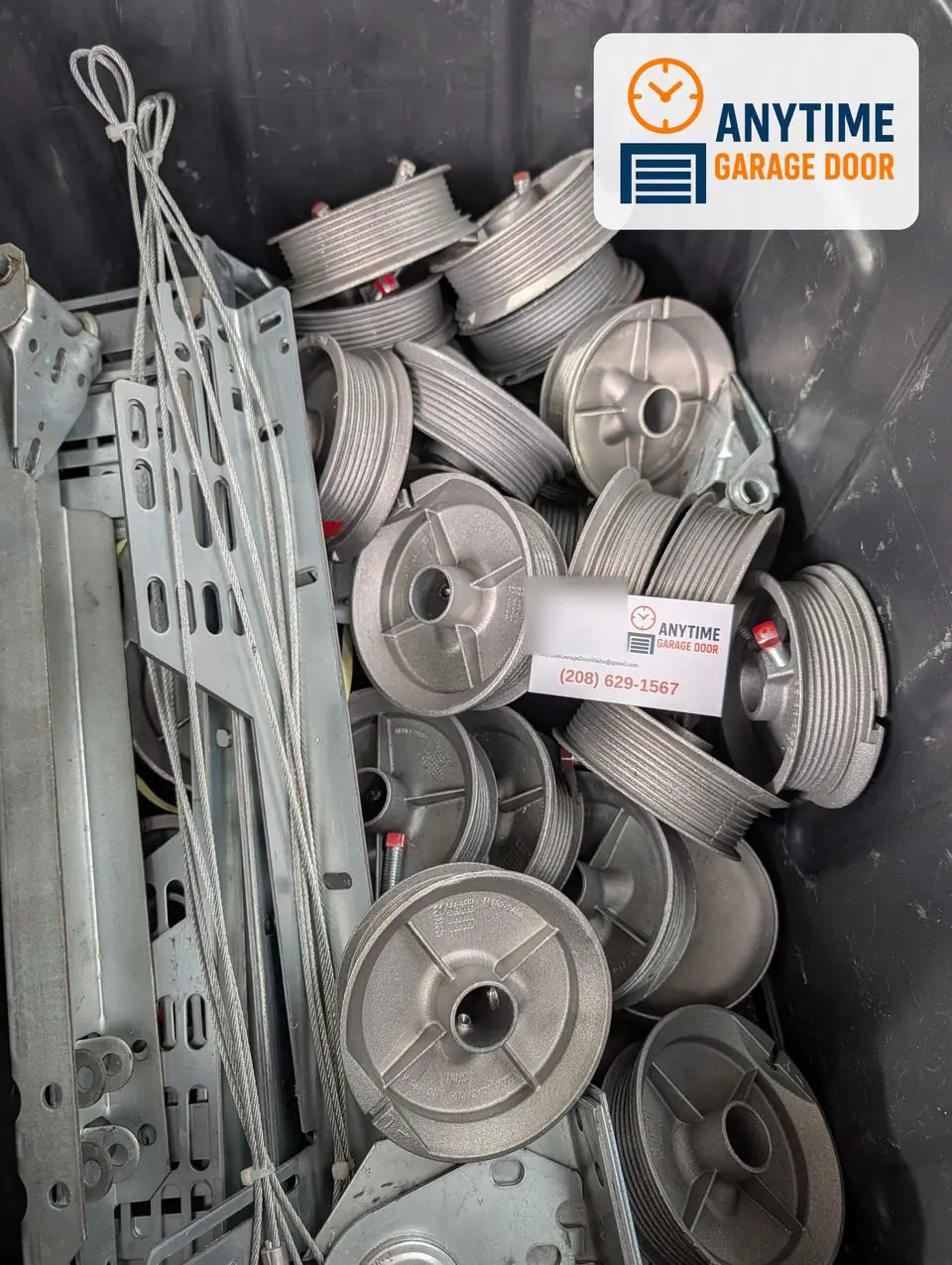
The drums are grooved spools that keep each cable wrapped neatly. If a drum cracks or a cable jumps its grooves, that side lifts faster or slower than the other, and the door tilts. We carry cable drums and cables in the truck and check both drums on every cable job.
Why cables fail
Most cable failures trace back to one of these:
- Wear and rust. Cables fray over time, mostly near the bottom brackets, where water and grime collect.
- A broken spring. The sudden loss of tension can jerk a cable off its drum.
- An off-track door. When rollers leave the track, the door twists and one cable goes slack.
- Wind or a bump. A strong gust against a partly open door, or a car clipping it, can pull a cable loose.
- Worn hardware. A rough bottom bracket or a damaged drum can cut into the cable.
Re-balancing: the step that matters most
A new cable is only half the job. Both cables need to carry the same load, and the spring tension has to match the weight of the door, or the door will drift, lean and wear out the opener. After the new cables are on, we even out the tension and check the balance by hand.
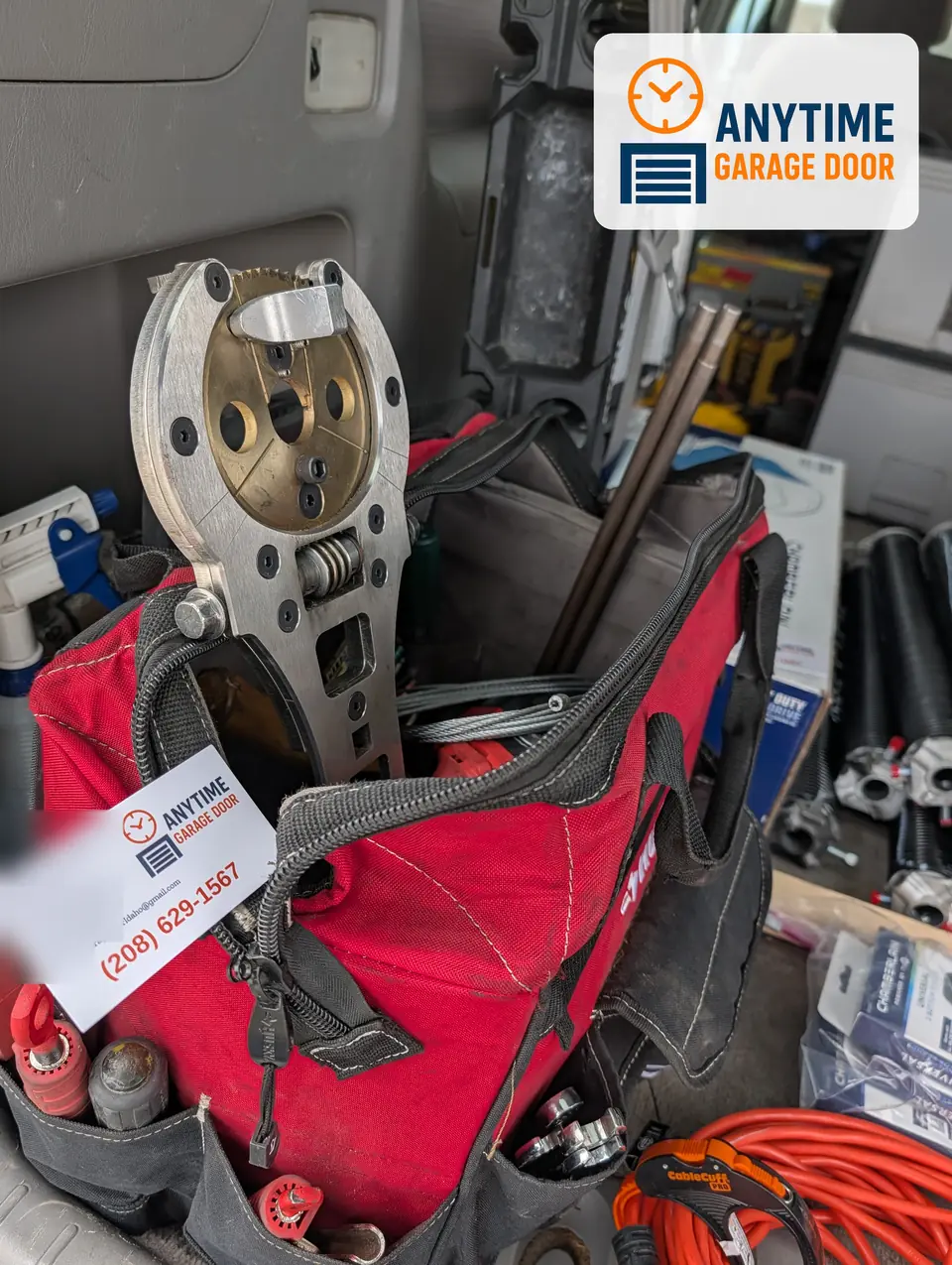
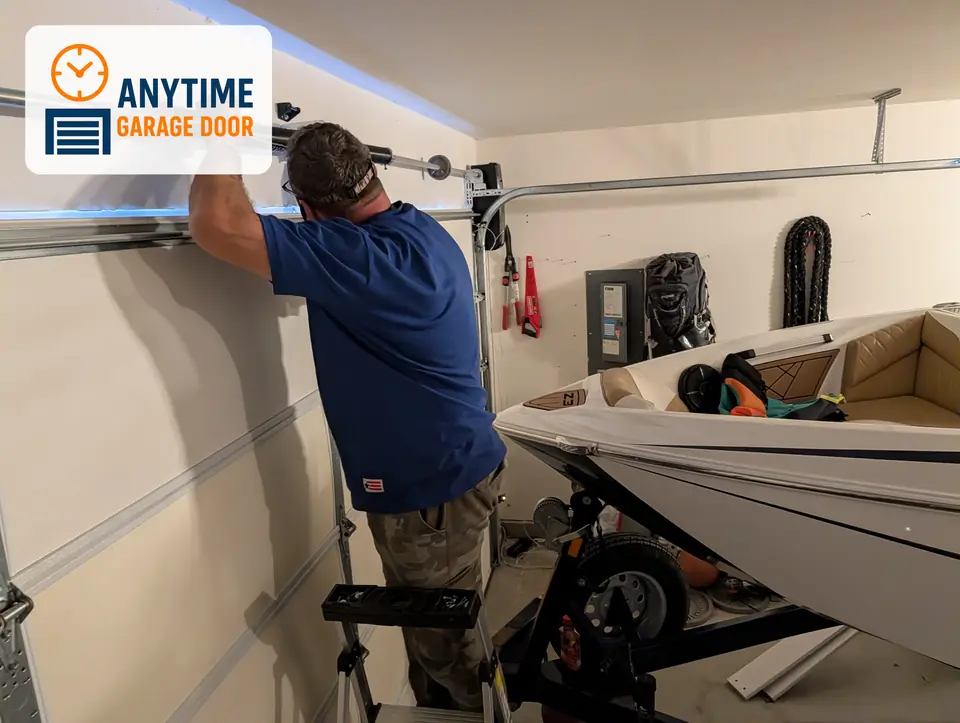
Tall RV and boat garage doors often need longer cables than a standard door. We carry a cable crimping tool for finishing cable ends on the job.
Cable, spring or track?
These three problems often show up together. A gap in the spring points to a spring, a loose cable with a whole spring points to the cable or drum, and rollers out of the rail point to the track.
We check all three on every cable call. When more than one needs work, we explain each part and its price separately.
Stay safe around a loose cable
Cables are tied into the spring system, so even with one cable broken, the other cable and the spring can still hold dangerous tension. Leave every cable and spring alone: never loosen, unwind or remove one yourself.
- Don't let kids or pets near the door or the wall button.
- Never duck under a door that's tilted or stuck partway up.
- The red cord disconnects the opener; save it for when the door is shut or braced by a helper. A door with a failed cable can drop without warning.
- Don't try to force a crooked door down by hand.
How it works
- Brace the doorBefore touching any cable or spring, we brace the door so it can't slide or fall.
- Trace the failureWe look over the drums, bottom brackets, springs and tracks to see what made the cable let go.
- Replace and re-balanceNew cables go on, then we set even tension on both sides.
- Run it and testWe cycle the door several times, then test the sensors and the door's auto-reverse.