The short answer
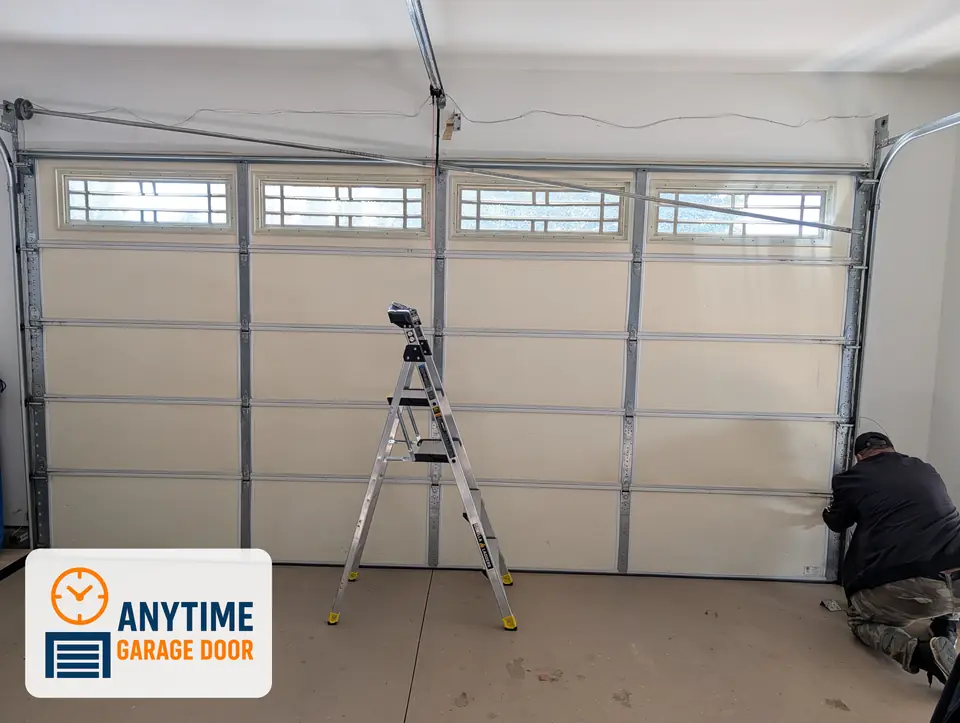
Repair the door when the problem is a part that wears out by design: a spring, a cable, a roller, a seal or the opener. Those parts are made to be replaced, and swapping one often costs less than a whole new door. Consider replacement when the sections themselves are damaged, rusted through or warped, when repairs keep stacking up, or when the door no longer fits how you use the garage.
A good technician will tell you which side of that line your door is on. When we come out, we lay out both options with their prices before any work starts, and estimates are free.
Parts that are made to be replaced
These are normal wear items. Replacing one doesn't mean the door is failing:
- Springs, which wear out after a set number of cycles and often break on cold mornings
- Cables, which fray over time and can snap when a spring lets go
- Rollers, which wear flat or get noisy; quiet nylon rollers are a common upgrade
- Weather seals, which crack in summer heat and let in dust, wind and cold
- Openers, which can often be repaired and sometimes are worth replacing
If one of these is your only problem, a repair is usually the right call. A regular tune-up, with lubrication, adjustments and safety checks, helps catch the next worn part early. For general problems that don't fit a single part, start with garage door repair.
When the door itself is the problem
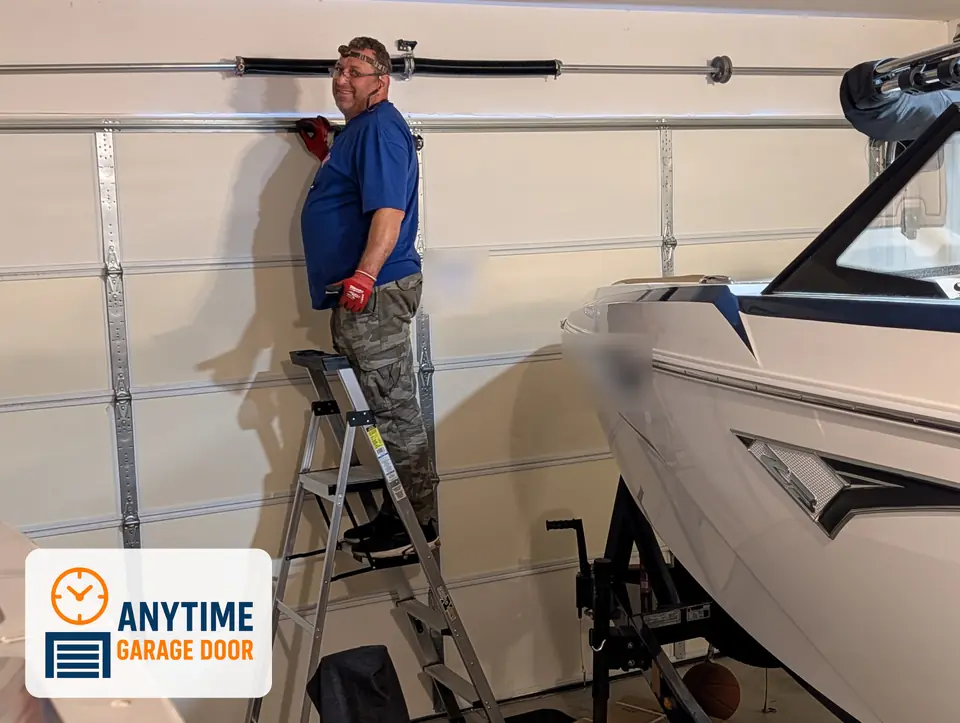
These signs point to the door, not its hardware. One alone may still be repairable; several together usually mean it's time to price a new door:
- Dents or cracks across more than one section, or a section that has buckled
- Rust that has eaten through the steel, or wood that is rotting or splitting
- Sections that sag or bow even after the hardware is adjusted
- Vehicle damage that bent both the sections and the tracks
- A different repair every few months, with no end in sight
A single damaged section is a different story: often we can swap just that one, matched where possible to the sections around it. On an older or faded door, though, a new section can stand out, and a whole new door may look better than a patchwork one. See panel replacement for how that works, and new garage doors if the whole door needs to go.
Questions to ask yourself
Beyond what's broken, think about how the door fits your home today:
- How do you use the garage? If it has become a workshop, a gym or the main way in and out, an insulated door can make the space more comfortable through summer heat and winter cold.
- Is it a builder-grade door? Many newer subdivisions around the valley came with light, basic doors. They work, but they dent easily and let in noise, wind and dust.
- Does it suit what you park? Tall RV and boat garages and farm shops on bigger Canyon County lots work their doors hard, and a door that was never sized for the job will keep needing attention.
- How does it look? The garage door covers a large part of the front of many homes, so a tired door can drag down the whole house.
- Is the opener due too? If both are old, replacing them together lets you choose a matched setup at once. Our guide to choosing a garage door opener covers the options.
Safety comes before the decision
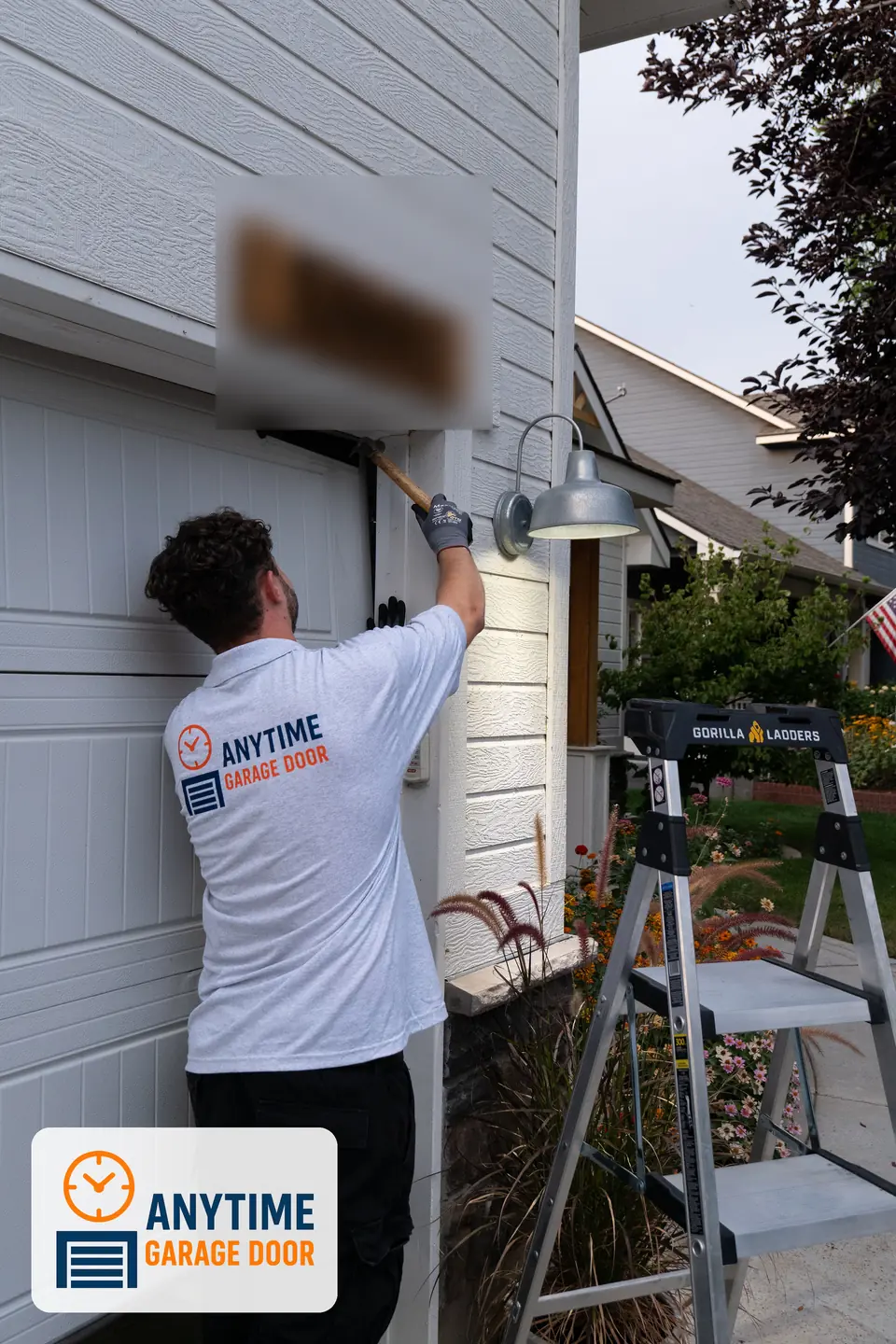
Whatever you decide, a door with a broken spring or a snapped cable shouldn't move again until it's fixed. Stop using the opener, since the motor ends up straining against the whole weight of the door and can burn out, or the door can drop. Keep kids and pets well back, and stay out from under a door that's stuck or hanging crooked.
Even on a door you plan to replace, the spring and cable tension can injure you, so don't loosen, unwind or remove any of it yourself. Don't touch the red emergency release either, except on a fully closed door or one that someone is holding; if a spring is broken, the door can come down fast once it's let go. If the door is stuck open, call us before anything else. We pick up 24/7, emergency calls get priority, and once the door is safe we can talk through repair or replacement.
How we help you decide
Call (208) 629-1567 and tell us how the door is behaving, roughly how old it is, and whether any sections are damaged. If a spring is the issue, our spring replacement cost guide breaks down what moves the price. On the visit, we inspect the entire door rather than only the broken part, so our advice covers both paths.
How it works
- DiagnoseWe look over every moving part and each section of the door to find what actually failed.
- Lay out the optionsYou hear what a repair involves and, if it makes sense, what a new door involves, each with its price, before anything is touched.
- You chooseThere's no pressure either way. If a repair gets the door working safely, that's a sound choice.
- Do the workWe complete the repair, or set a time for the new door installation.
- Check our workWhatever we fixed, the door's balance, sensors and auto-reverse get tested, and the work area is cleaned before we go.