What garage door replacement involves
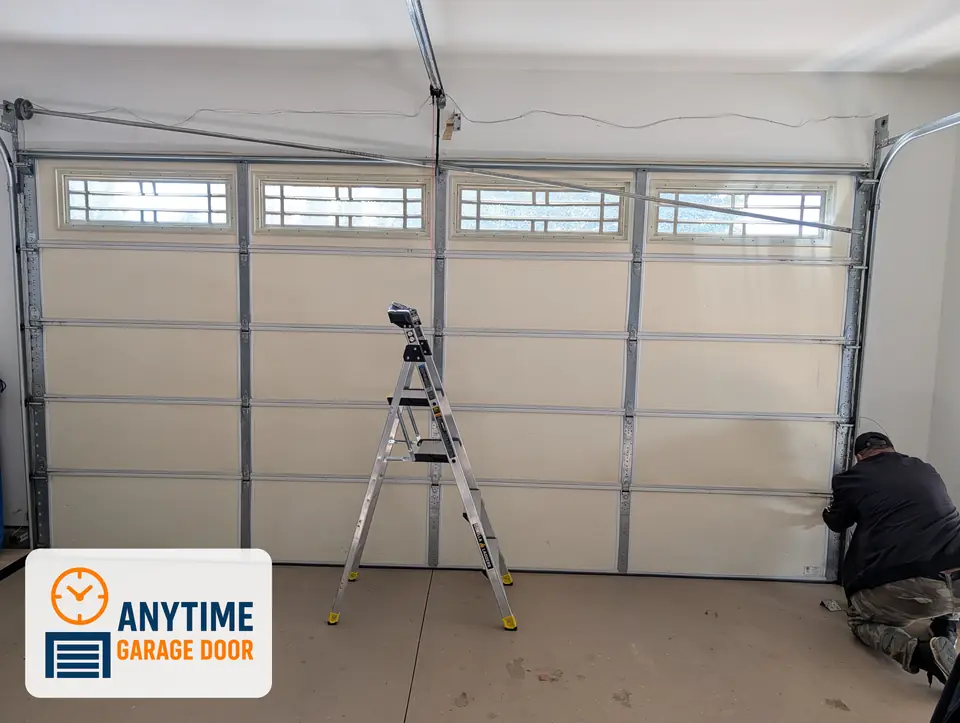
Replacing a garage door means more than swapping panels. A new door needs its own tracks, rollers, hinges, cables and springs, and the springs have to be sized to that door's weight.
Taking down an old door is one of the most dangerous parts of the job, because its springs are still wound tight. Never try it yourself, and never loosen, unwind or remove the springs or the cables attached to them. We release the spring tension with winding bars before a single panel comes off.
Do you need a new door, or a repair?
Fixing the door you have often costs less than a new one, so we check that first. Replacement makes sense when several sections are damaged, the door is rusted through, matching panels can't be found, or you want an insulated door or a new look.
If you're torn, our repair vs. replace guide lays out the signs that point each way. If only one section is damaged, see panel replacement.
Measuring for a new door
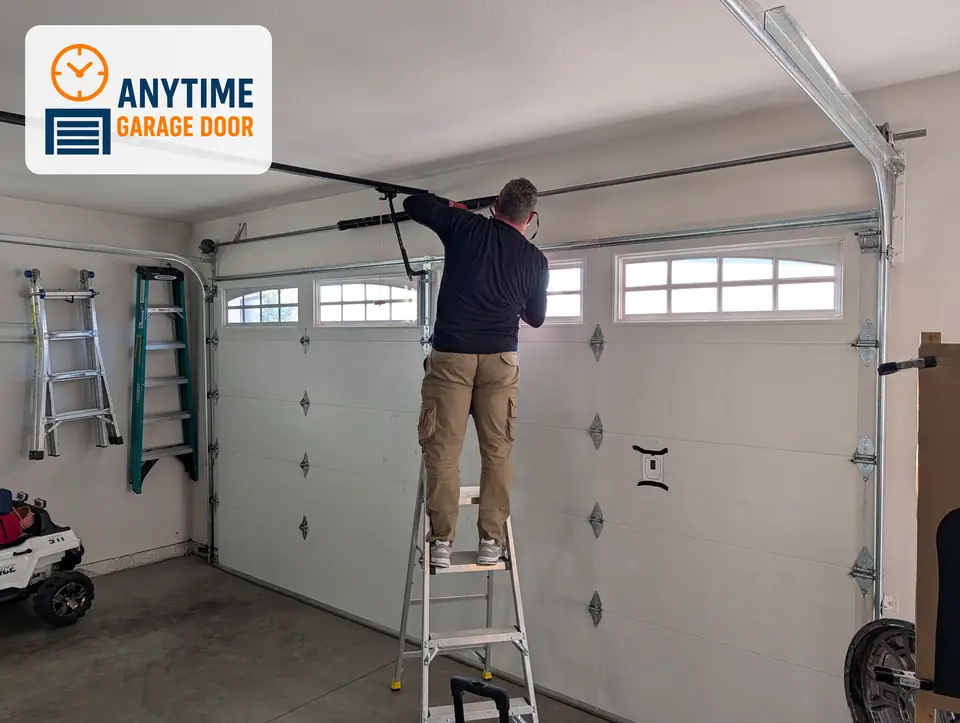
We measure the opening and the space around it, because a door that fits the hole but not the garage won't work. Here's what we check:
- Width and height of the finished opening
- Headroom: the space above the opening that the tracks and springs need
- Side room: the wall space on each side for the vertical tracks
- Backroom: how far the door reaches into the garage when open
- The condition of the framing and jambs the door mounts to
A rough width and height helps when you call; we take exact measurements at your home before we quote.
Thinking about insulation
How much insulation matters depends on what the garage is for. A detached shop that's never heated or cooled may not need it. If the garage is attached, sits under a bedroom, or doubles as a workshop or home gym, ask us during the estimate whether an insulated door makes sense for you.
Our cold winter mornings and hot summers make the rooms beside an attached garage harder to keep comfortable. Whatever door you choose, new weather seals keep air from slipping around its edges.
Tall RV and boat garage doors
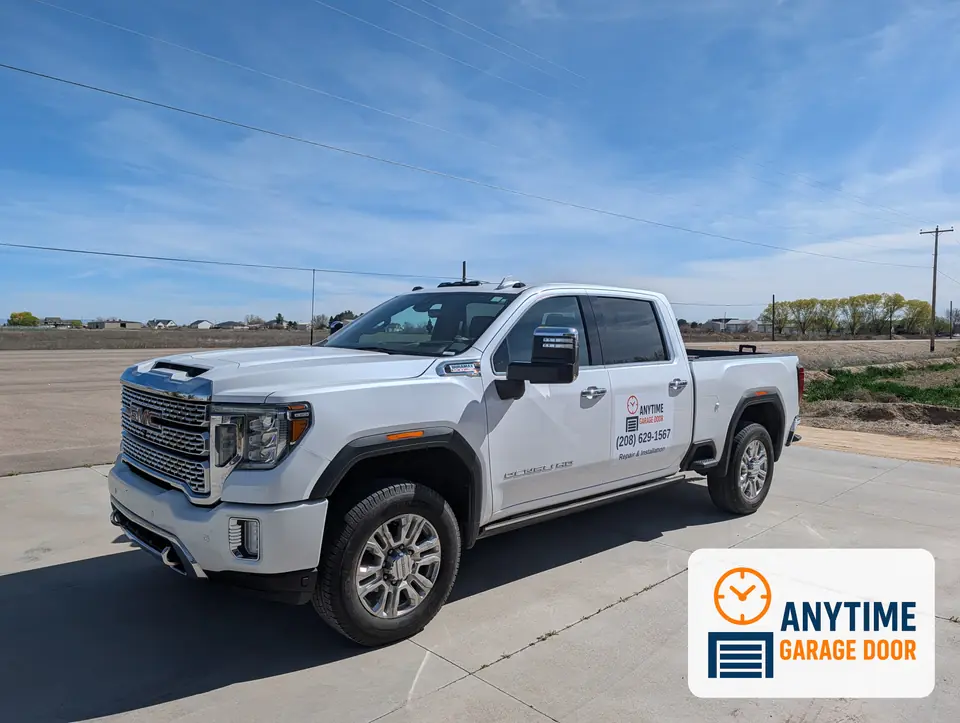
Tall bays for an RV, boat or trailer are common around the Treasure Valley, from newer homes to farm shops on larger Canyon County lots. These doors are taller and heavier than standard ones, so they need longer tracks, stronger springs and enough room for the opener to run.
Wind puts more load on a tall door, so the framing it mounts to and the track brackets deserve extra care. If you have a tall bay, give us the opening's width and height when you call, and we'll talk through what it needs.
Your opener and the new door
A new door is a good time to look at the opener. If yours is old, loud or has no safety sensors, we can install a Chamberlain myQ opener along with the door; see opener installation. If your opener is in good shape, we reconnect it and reset the force and travel limits for the new door.
Call (208) 629-1567 to set up a free estimate. We answer 24/7.
How it works
- Free estimateWe measure, talk through insulation and looks, and give you the price before you commit.
- Remove the old doorWe disconnect the opener, safely release the old springs' tension and take the old door down.
- Install the new doorThe new sections go up with tracks, rollers, cables and springs sized for the door.
- Balance and testWe balance the door, adjust the opener, and test the sensors and auto-reverse.
- Clean upWe tidy the work area and walk you through how the new door and opener run.