What's wrong with my garage door?
Almost every garage door problem comes down to one of six parts: the springs, the lift cables, the rollers, the tracks, the panels or the opener. Each one leaves clues you can spot from a safe distance, and we'll show you which part is at fault before we touch anything.
The springs, not the motor, hold up the door's weight. That's why a door that suddenly gets heavy is rarely an opener problem.
Match the symptom to the part
Stand inside the garage with the door down, well clear of its path, and follow the link that matches.
- A split in the spring coil or a sharp bang overhead: spring replacement.
- A loose cable or a door hanging crooked: cable replacement.
- Grinding, squealing or rattling as the door moves: roller replacement.
- Rollers out of the rail or a bent rail: track repair.
- A dented, cracked or bowed section: panel replacement.
- A door that reverses, a dead remote, or a humming motor with no gap in the spring: opener repair.
- Daylight or drafts under the door: weather seal replacement.
- A door that works but runs rough or loud: it may only need a tune-up.
If nothing looks broken but the door still won't move, start with these safe checks for a door that won't open.
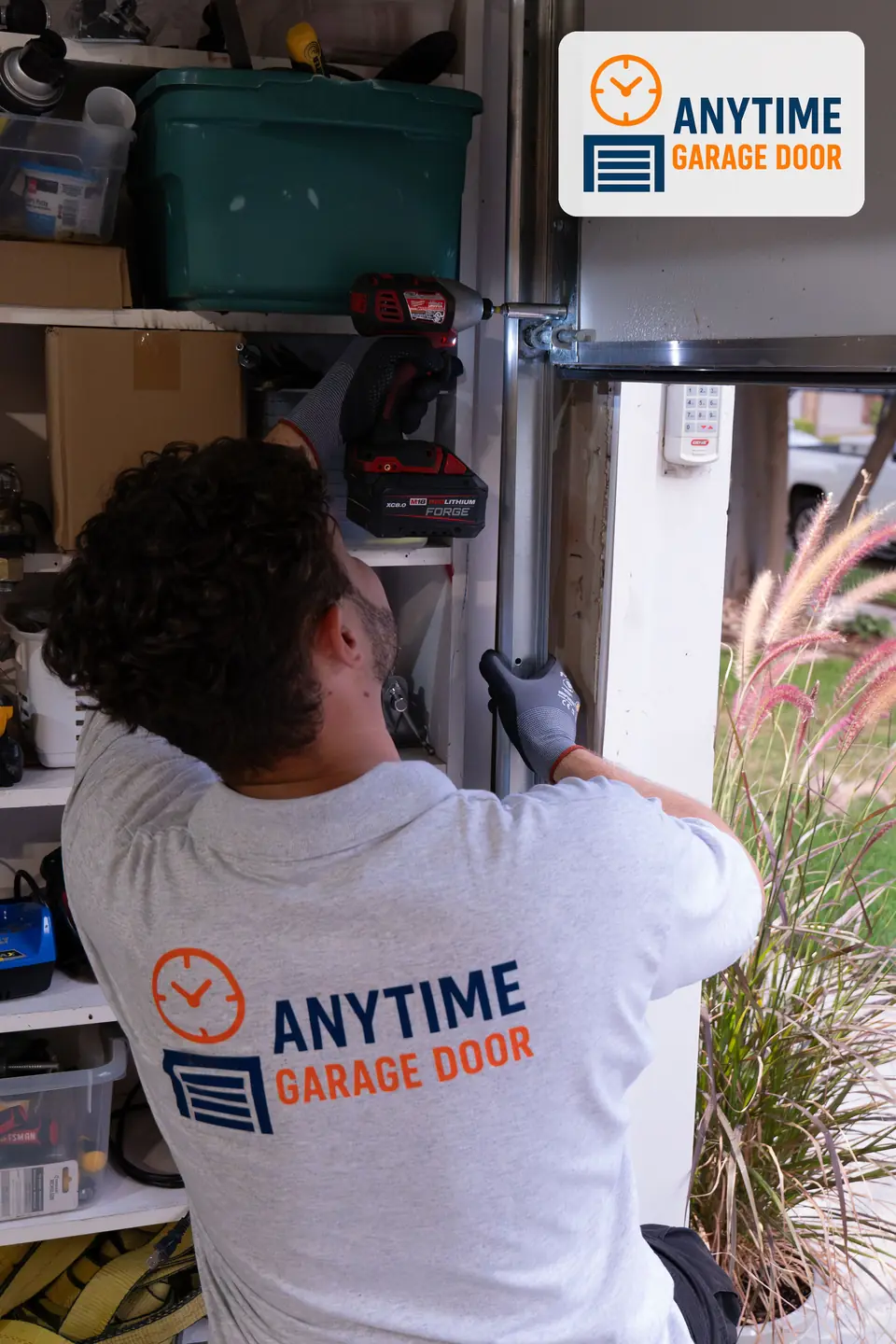
What you can safely check yourself
A few checks are fine for anyone. Make sure the opener has power, then look at the two safety sensors near the floor. Their lights should be on, nothing should block the beam, and the lenses should be clean; summer dust clouds them often.
Springs and cables are another matter. Both carry dangerous tension. Never loosen, unwind or take them off yourself. If you think one has broken:
- Stop using the opener. Each try strains the motor and can burn it out, or let the door fall.
- Keep kids and pets well back from the door until it's fixed.
- Nobody should walk through the opening while the door is stuck or tilted.
- Pull the red emergency release only once the door is fully down, or while a second person holds it. A door with a dead spring can slam down the instant it's released.
Most doors need a repair, not a replacement
One failed part rarely means you need a new door. Springs, cables, rollers, track sections and single panels can each be replaced on their own, and a single-part repair is often cheaper than a new door. If the whole door is worn out, we'll say so and compare repair with a new door; our repair-or-replace guide explains how to weigh it.
Cold winter mornings are hard on springs here, and summer dust wears on rollers and sensors. One tired part often means others are close behind, so we inspect every moving part, not only the piece that broke.
What to mention on the phone
A few details help us arrive ready for your door:
- What the door is doing: stuck open, stuck closed, crooked, noisy or reversing.
- Whether you heard a bang, or see a gap in a spring or a loose cable.
- The door size: a single, a wide two-car door or a tall RV door.
- Whether the opener runs, hums or stays silent.
Our number is (208) 629-1567, day or night. We answer 24/7 and put emergency calls first.
How it works
- You callDescribe what you see and hear, and we'll tell you how to keep everyone safe until we arrive.
- We diagnoseA technician comes to your home and finds the part that failed.
- You hear the optionsYou get the repair choices and the price up front, before we begin.
- We repair itThe failed parts are replaced or adjusted.
- We test itWe run the door, confirm it's balanced and make sure the sensors and auto-reverse respond.
- We clean upWe clear the work area and leave your garage tidy before heading out.