Start here: is it the opener or the door?
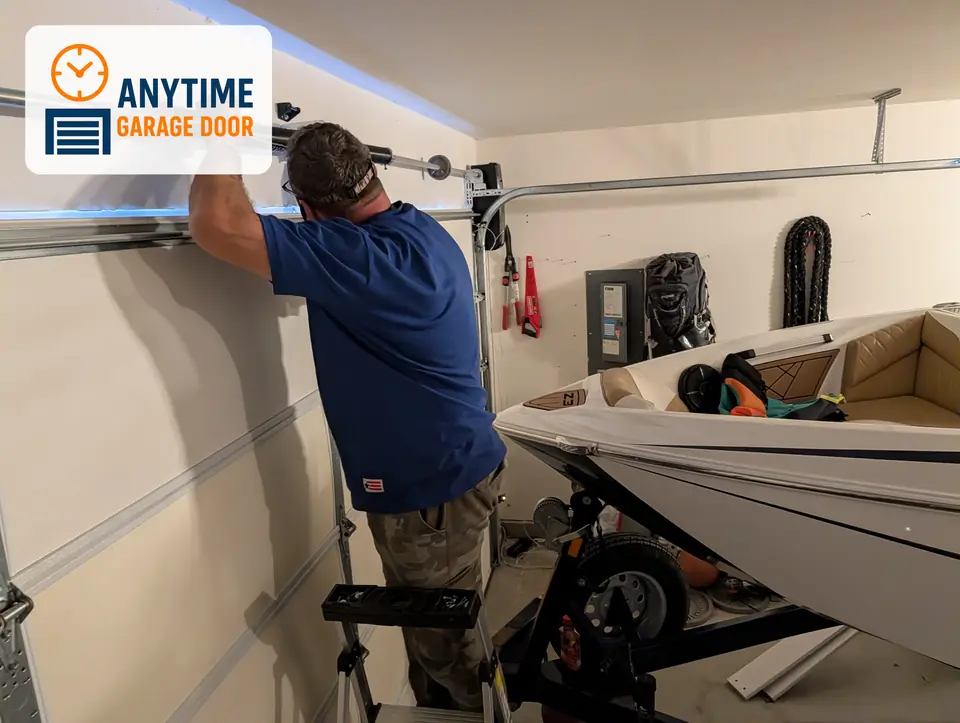
First, work out whether the opener has lost power or signal, or the door is too heavy to lift. Before pressing anything, look for three things: a split in the spring above the door, a slack cable at either bottom corner, and a door that isn't sitting level.
If all looks normal, press the wall button once. Nothing at all? Start with power. If the motor hums, or the door rises a few inches and stops, stop pressing and go straight to Check 5.
The checks below run from simple to serious, and none involve touching the springs or cables.
What never to touch
Look all you like, but leave these alone:
- The torsion springs on the shaft over the door, and the cones at each end
- The lift cables and the drums they wind around
- The bottom brackets where the cables attach
- Any bolt or set screw on the spring assembly
Each of these is under enough tension to injure you badly, so never loosen, unwind or remove any spring or cable. If one is broken, stop using the opener until the repair is done: each try makes the motor fight the full weight of the door, which can burn it out or bring the door down. Keep kids and pets out of the garage, and never walk or stand beneath a door that's stuck partway or sitting crooked.
Check 1: power to the opener
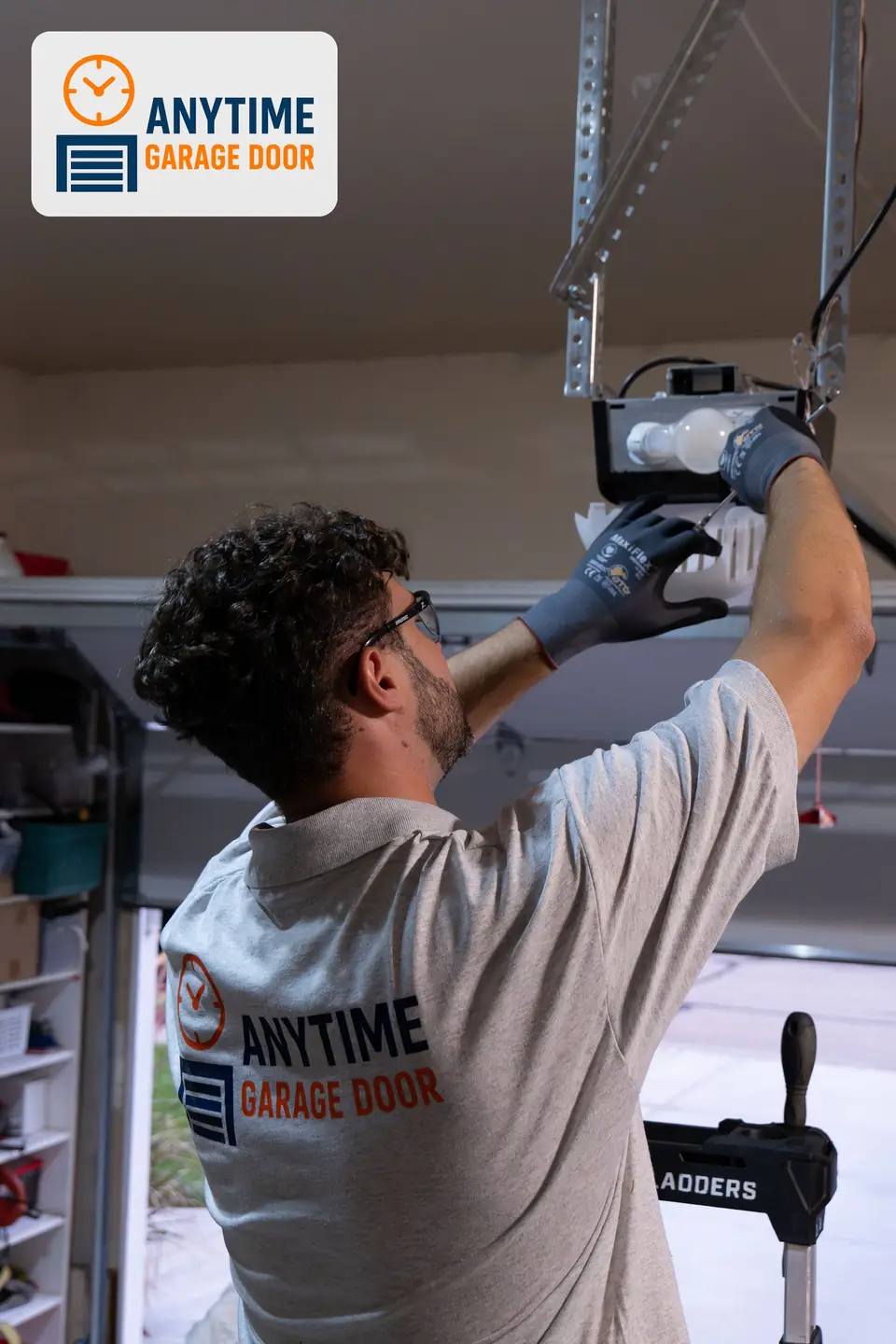
If the opener's light won't come on, make sure the unit is plugged in, then test the outlet with a lamp or phone charger. Garage outlets often sit on a GFCI that trips after a storm or surge, and its reset may be on another outlet across the garage. Then check the breaker panel.
Check 2: manual and electronic locks
Many doors have a manual lock: a slide bolt inside, or a handle outside that throws a bar into the track. If it's engaged, the opener strains against it and may stop or reverse. Slide it open and try again.
Wall controls often have a padlock button too. Once it's on, the handheld remotes go dead while the wall button works as normal, so switch it off as your opener's manual shows.
Check 3: the safety sensors
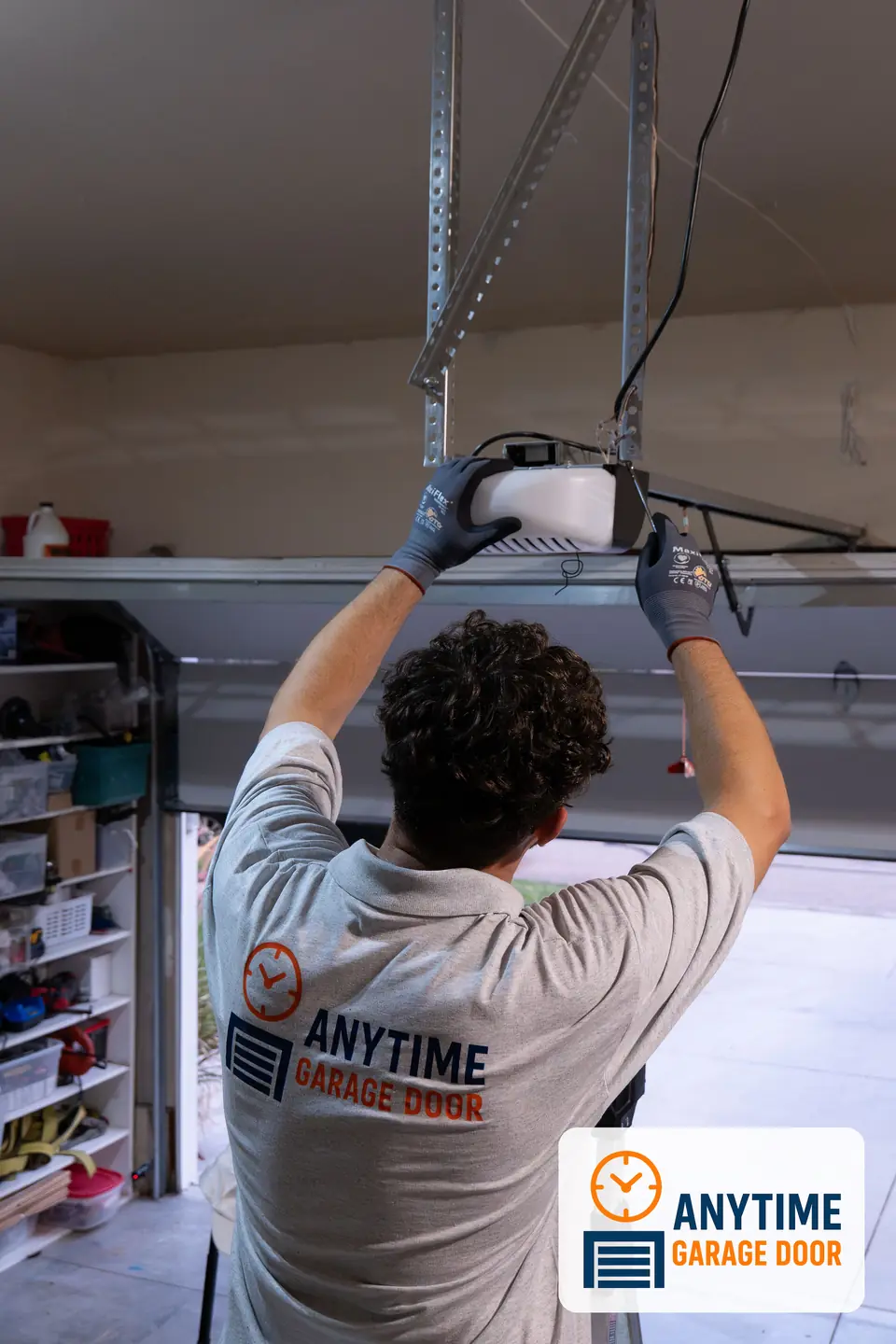
The sensors low on each side of the opening only watch a closing door, so they rarely keep one from opening. Check them anyway: a sensor fault is often how a door ends up stuck open, starting down, reversing and refusing to stay shut.
Make sure both sensor lights are steady, wipe the lenses, and check that neither bracket has been bumped out of line. Low summer sun, dust and cobwebs can all blind a sensor.
Check 4: remote and keypad batteries
Remote dead but wall button fine? Put in a fresh battery, since weak ones quit on cold nights. If one remote still won't respond while others do, it has likely lost its link to the opener; see opener repair for reprogramming.
Check 5: look for a broken spring or cable
This is the most common reason a door suddenly feels too heavy to lift. Look at the bar above the closed door: a broken spring shows a split where the coils have pulled apart. Other giveaways are a cable dangling at a bottom corner, a door sitting lower on one side, or a sharp crack heard earlier. The opener may hum, or quit after a few inches, because the motor was never meant to carry that weight alone.
If you spot any of these, leave the opener alone and call us. The red release cord is off-limits too, unless the door is completely shut or another person has a firm grip on it, because a door without a working spring can drop the moment it's released. Our spring replacement and cable replacement pages explain those repairs.
Other causes worth knowing
If the five checks come up empty, consider these:
- A frozen bottom seal. On icy mornings the seal can freeze to the slab. Don't keep running the opener; let it thaw. A torn seal calls for weather seal replacement.
- A disconnected trolley. If someone pulled the red cord, the motor runs and the trolley moves, but the door stays put. Once the door is fully closed, use your opener's manual to hook it back up. If the door is open and won't move freely by hand, don't force it down; call us.
- A door off its track. Rollers out of the track or a door hanging sideways need track repair, not more button presses.
- Worn opener parts. If the motor runs but the trolley doesn't move, a gear inside may be worn. For an old opener, see how to choose a new opener.
What to tell us on the phone
Call (208) 629-1567, 24/7. Tell us what you heard, like a bang, grinding or humming; what the opener does when you press the button; whether the door is closed, partly open or crooked; and whether a vehicle is trapped inside.
Car stuck in the garage, or a door that won't come down? That's an emergency call; see emergency repair for what to do meanwhile. On the visit, we find the cause, give you the price before starting, and test the balance, sensors and auto-reverse once the door runs.