How do I know a garage door spring is broken?
Look for a gap. On most doors the spring rides on a steel bar just above the closed door, and a broken one shows open space between two lengths of coil. Many people hear the break before they ever see it.
The motor may hum while the door creeps up a short way and stalls, or the door starts to rise and then reverses. It can also sit unevenly, with one cable hanging slack.
If you see any of these, leave the opener off. Without the spring, the motor fights the door's full weight and can strain, burn out or let the door drop.
Torsion springs vs. extension springs
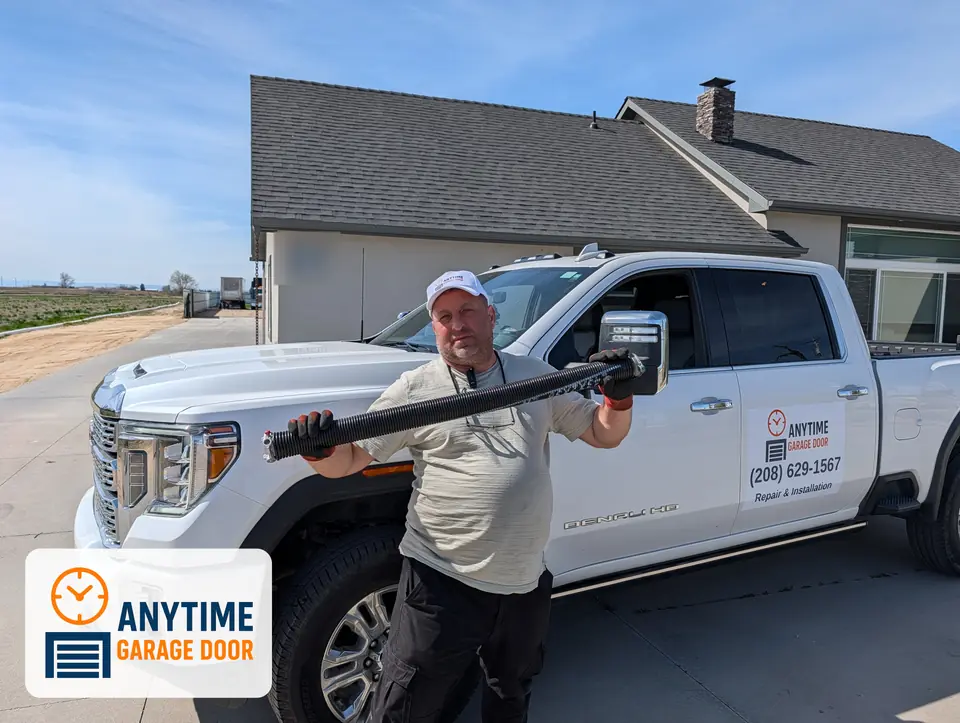
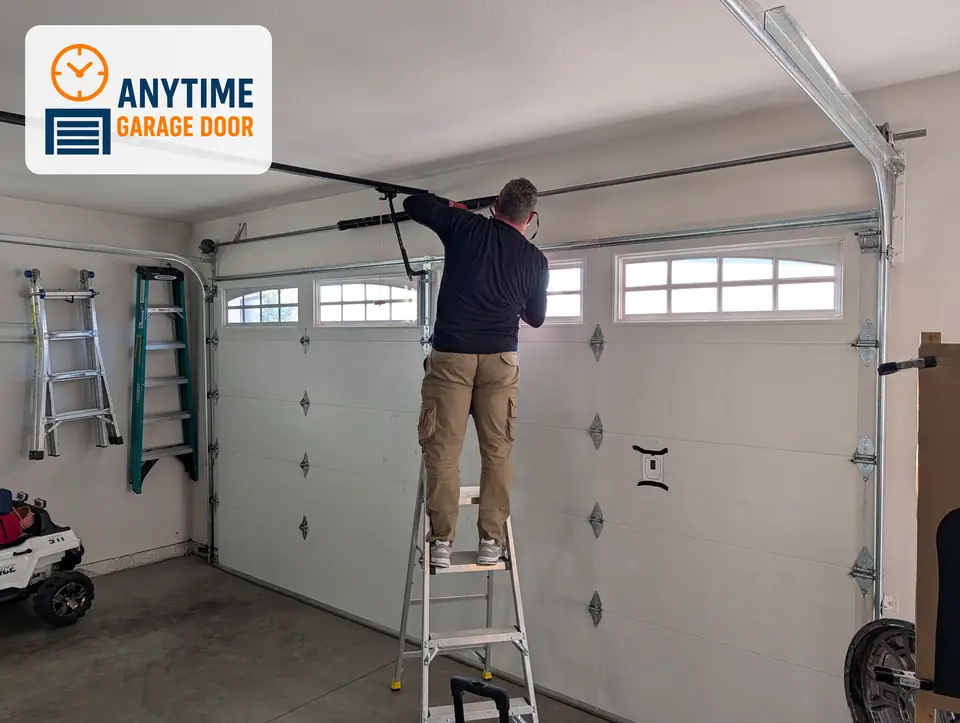
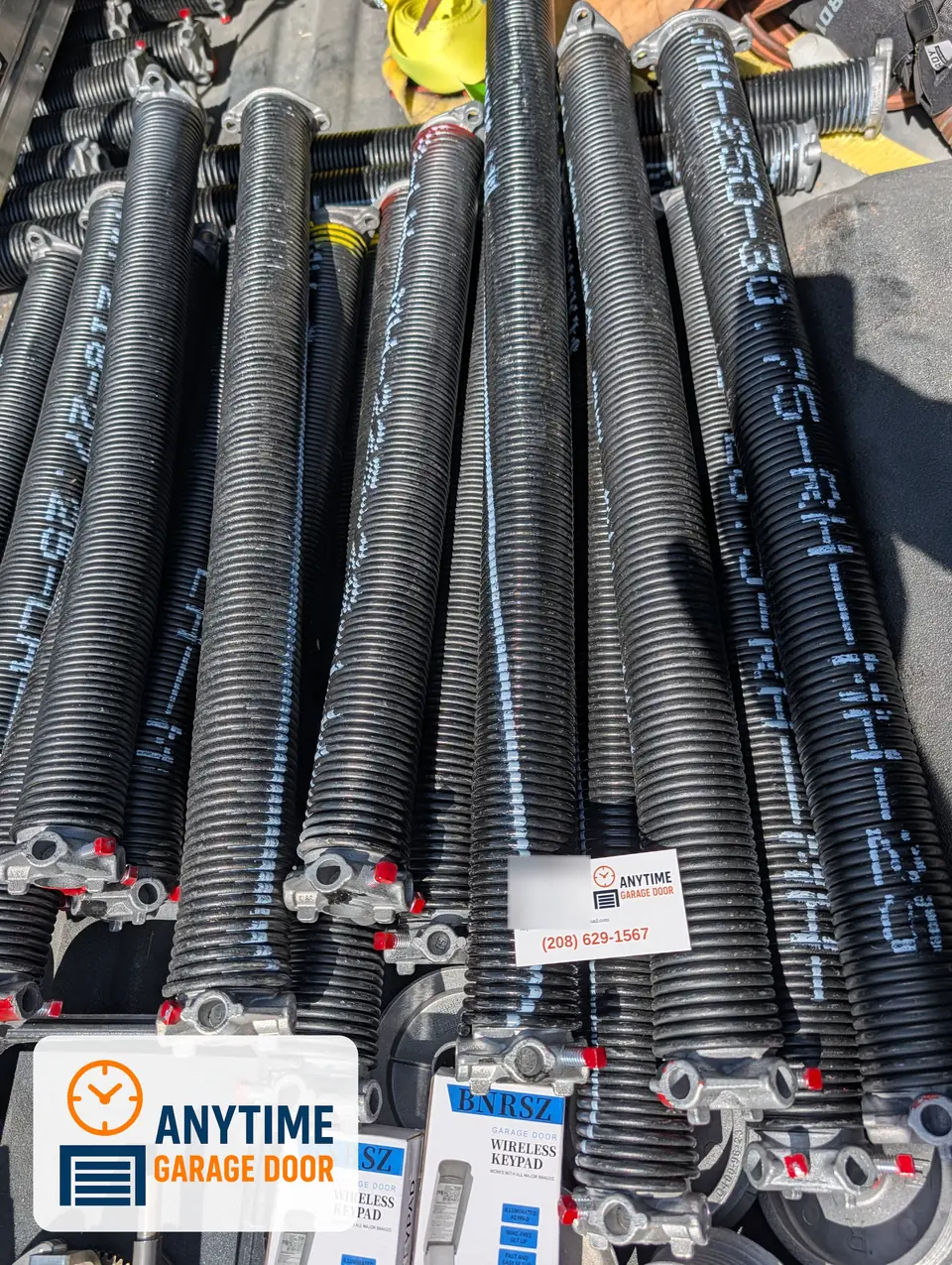
Torsion springs mount on a steel shaft above the door opening. They twist tighter as the door closes, storing energy, then unwind to help lift it. They're the most common type on the doors we service, and they're what we stock in the truck.
Extension springs run above the side tracks and stretch as the door closes. They're more common on older or lighter doors, and each should have a safety cable through it so a broken spring can't whip across the garage. They're under heavy tension too, so never unhook or adjust one yourself.
Either way, springs are sized to your door's weight. Too weak, and the door stays heavy. Too strong, and it drifts up on its own.
Why both springs are often replaced together
Many two-car doors run on a pair of torsion springs. Both have lifted the door the same number of times, so when one breaks, the other is usually close behind. Replacing both keeps the door balanced and can save a second visit.
We'll show you the condition of the other spring and let you decide. If one spring is all your door needs, we'll tell you that too.
High-cycle springs for doors that work hard
Springs are rated for a set number of trips up and down. If your home still has the springs the builder put in, they're often standard-cycle. If your family goes in and out through the garage many times a day, durable high-cycle springs are worth asking about.
Many breaks happen on cold winter mornings, when a worn coil takes the strain of the day's first opening.
Springs, cables and tracks: how the repairs differ
The springs supply the lift, and the lift cables transfer that force to the door's lower corners. When a spring breaks, the sudden slack can unspool a cable from its drum. A snapped cable can also look like a spring problem, so we check both on every spring call.
Rollers out of the rails or a bent rail call for track repair instead. When we find more than one problem, we price each part separately.
Spring safety: what not to do
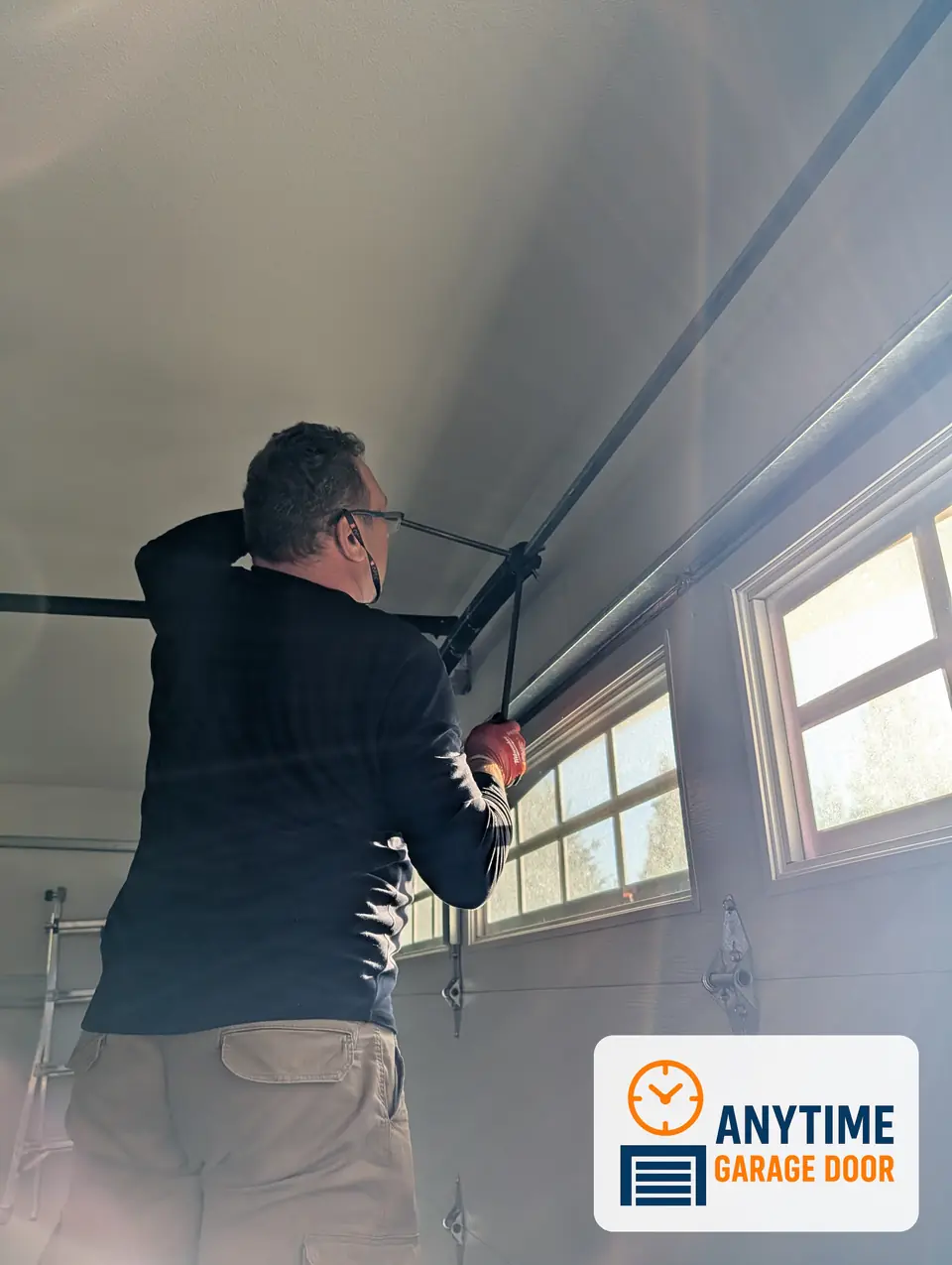
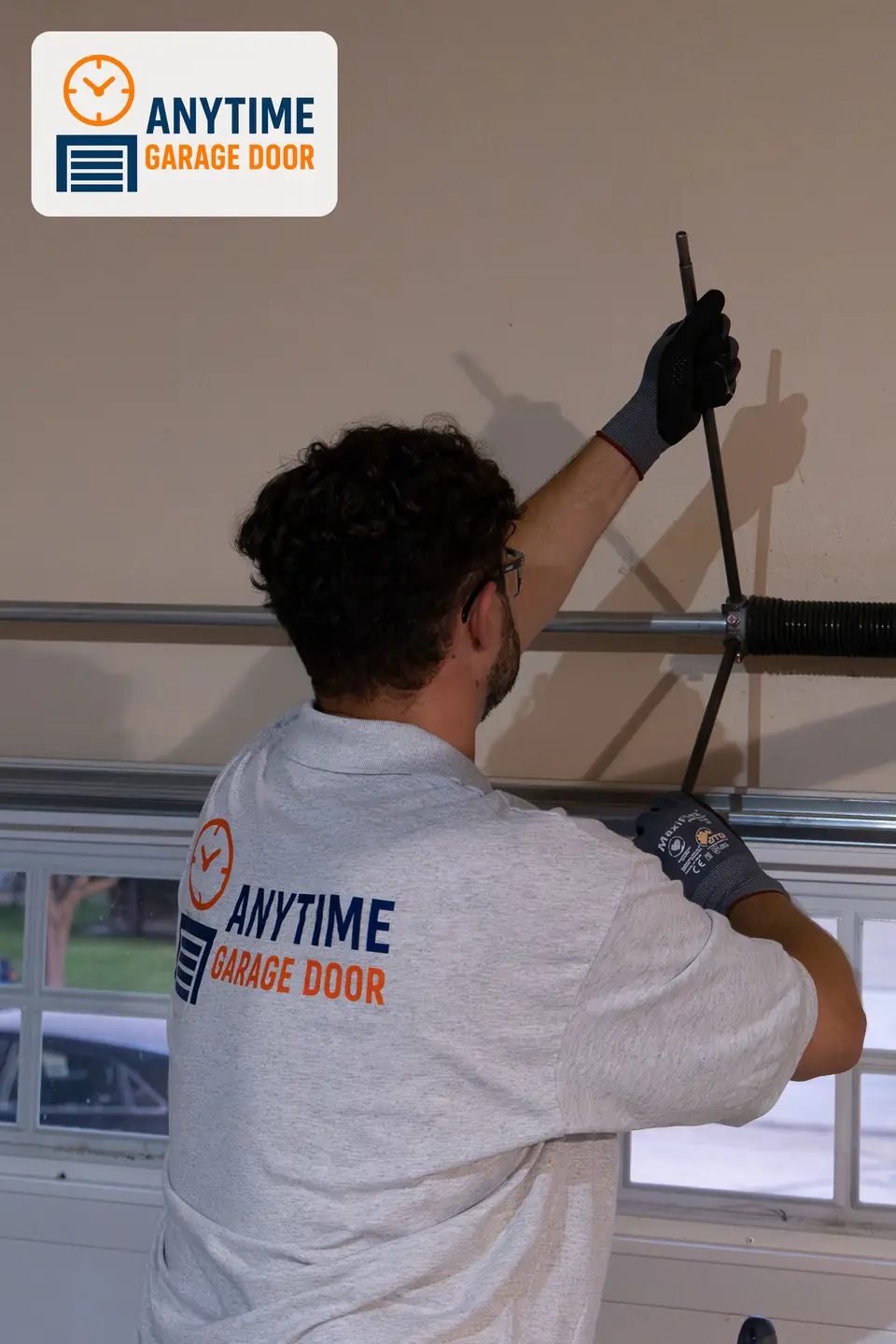
Torsion springs, extension springs and the lift cables connected to them all store dangerous tension. None of them should ever be loosened, unwound or removed by a homeowner. We use proper winding bars and wind each new spring to suit your door.
- Make sure children and pets stay clear of the garage until the repair is done.
- Keep clear of the space beneath the door while it's jammed or sitting unevenly.
- With a broken spring, a pull on the red emergency release can send the door down fast. Pull it only if the door is closed all the way or someone is holding it.
- If the door is stuck open, don't force it down.
How it works
- Look over the systemWe check both springs, the cables, the drums and the bearings.
- Talk through choicesYou hear the standard and high-cycle options and what each costs before any work begins.
- Swap the springWith the door secured, we safely let the tension off the old spring, then mount and wind the new one.
- Balance and testWe fine-tune the balance so the door holds steady when lifted halfway, then run the sensor and auto-reverse tests.