What a tune-up covers
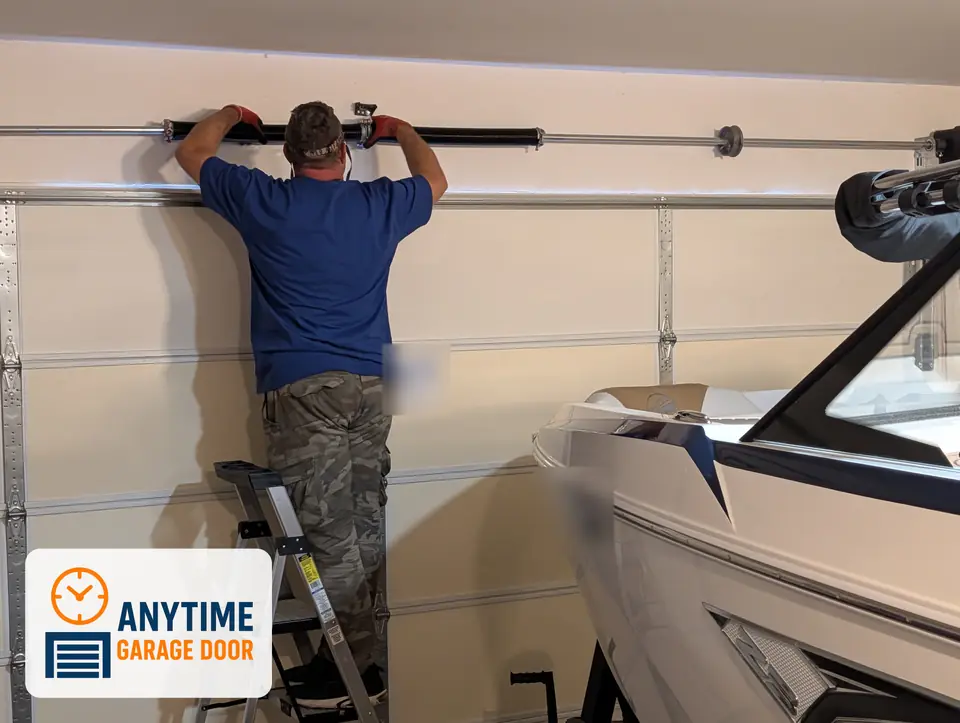
A tune-up is maintenance for a door that still works. Every trip up and down shakes bolts loose and wears down the grease, so we go over the whole system and tell you what we find:
- Lubricate the moving metal: hinge pivots, roller stems and bearings, and the spring coils
- Tighten hinge bolts, brackets and track fasteners
- Check the springs, cables and cable drums for gaps, rust, fraying and wear
- Inspect the rollers and tracks for wear, bends and dirt
- Test the door's balance
- Test the safety sensors, force setting and auto-reverse
- Look over the bottom seal and weatherstripping
If we find a worn part, we show it to you and explain the price before replacing anything. We also point out worn seals; swapping them out is its own weather seal replacement job.
The balance test
Balance is the check we care about most, because correctly wound springs make a heavy door feel light. A balanced door raised partway hangs there by itself. If it sinks or climbs, the springs have lost tension or were wound wrong, and the opener has been straining to compensate.
Skip this test if the door is crooked, a cable hangs loose, a spring has a gap, or the door already feels very heavy. Stop using the opener, keep children and pets away, stay out from under the door and call us.
If everything looks normal, send children and pets out of the garage first. With the door fully closed, disconnect it from the opener with the red emergency release cord. Standing to one side with your feet clear, raise it from the bottom until it's about halfway open.
Ease your hands away slowly, keeping your fingers out of the joints between sections. If the door starts to drop, step back and let it go; never try to catch it. If it drifts down or creeps up, call us to reset the springs. Then lower it and reconnect the opener as your manual shows.
The auto-reverse and sensor tests
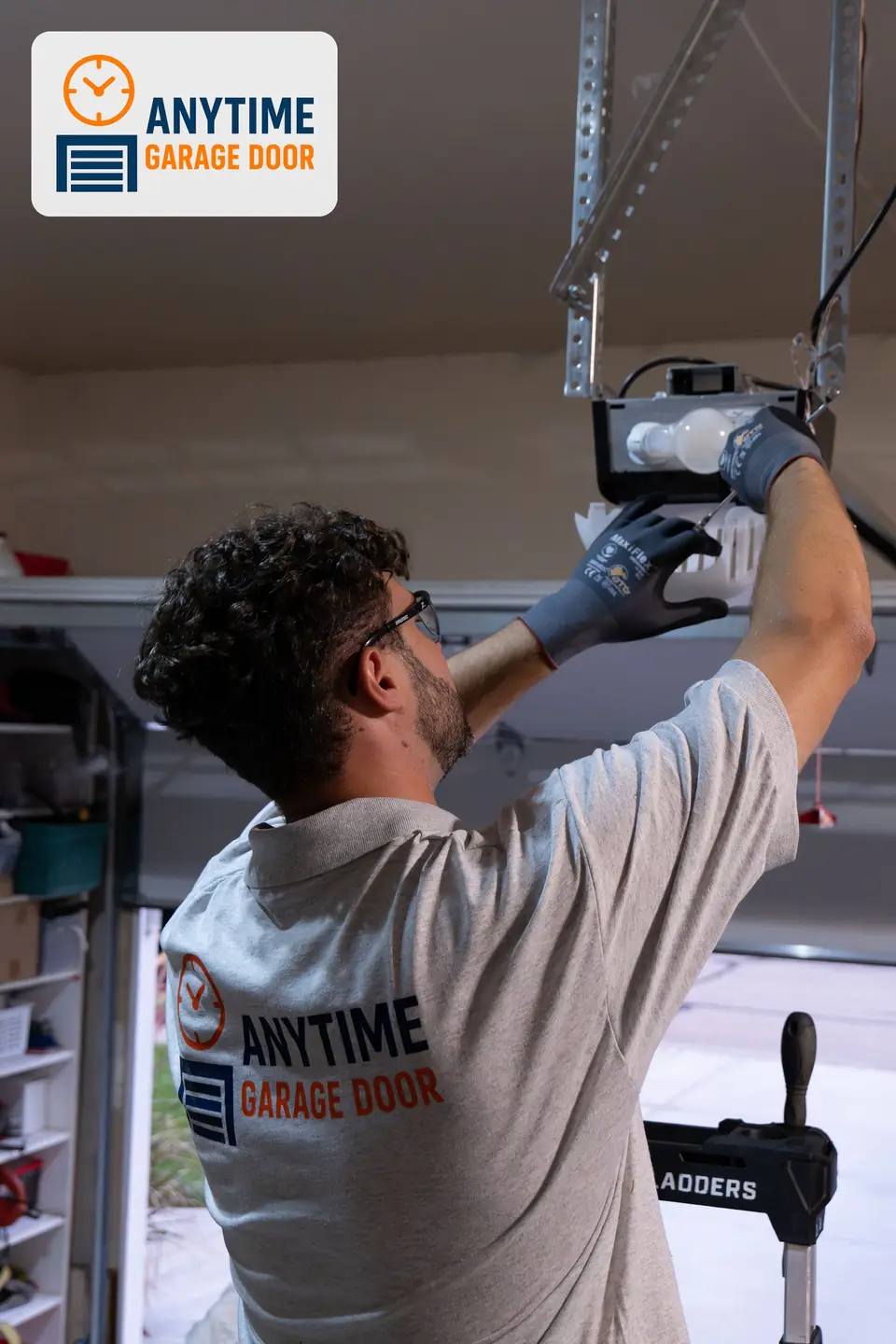
Your opener has two separate safety systems, and we check both. The sensors near the floor should reverse the door when something crosses the beam. The force setting should reverse it when it presses on something the sensors can't see.
For the force test, we set a short 2x4 on its widest side across the middle of the opening and run the door down onto it. When the bottom edge meets the wood, the opener should reverse right away and send the door back up. If it keeps pressing or stalls on the board, the force or travel limits need resetting. If you try this yourself between visits, keep children and pets well away.
Why Treasure Valley doors need it
Cold winter mornings thicken old grease and stiffen worn parts, and that's when many tired springs finally break. Summer heat dries lubricant out, and wind pushes dust into the tracks and rollers, where it grinds on the bearings. Fall is the ideal time, before the cold sets in.
Tune-up or repair?
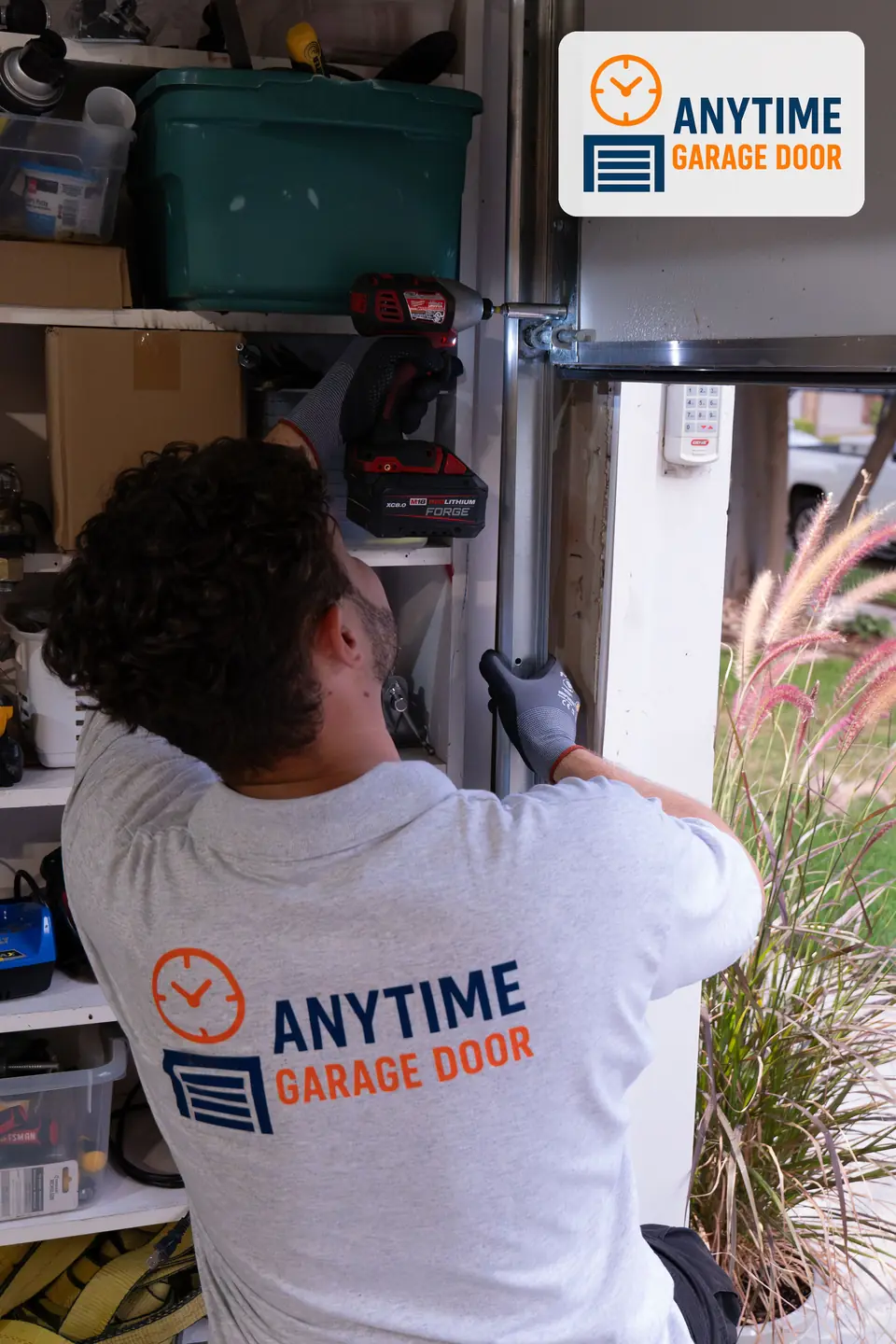
If your door is already broken, crooked or won't open, book a garage door repair visit instead. If we spot worn rollers or a spring close to wearing out, we show you, and the choice to fix them is yours. An opener that strains may need opener repair or spring work, not more grease.
To book, call (208) 629-1567 and mention roughly how old the door is and any new noises you've noticed.
What you can do between visits
- Twice a year, give the hinge pivots and roller stems a light coat of a spray made for garage doors. Keep it off the tracks, which should stay clean and dry.
- Wipe the sensor lenses and test the auto-reverse monthly.
- Watch and listen for changes: new noises, jerky movement, or a gap in a spring.
Never adjust, loosen, unwind or remove the springs, cables or bottom brackets yourself; they stay under load all the time, and the work takes winding bars and training.