What a new opener installation includes
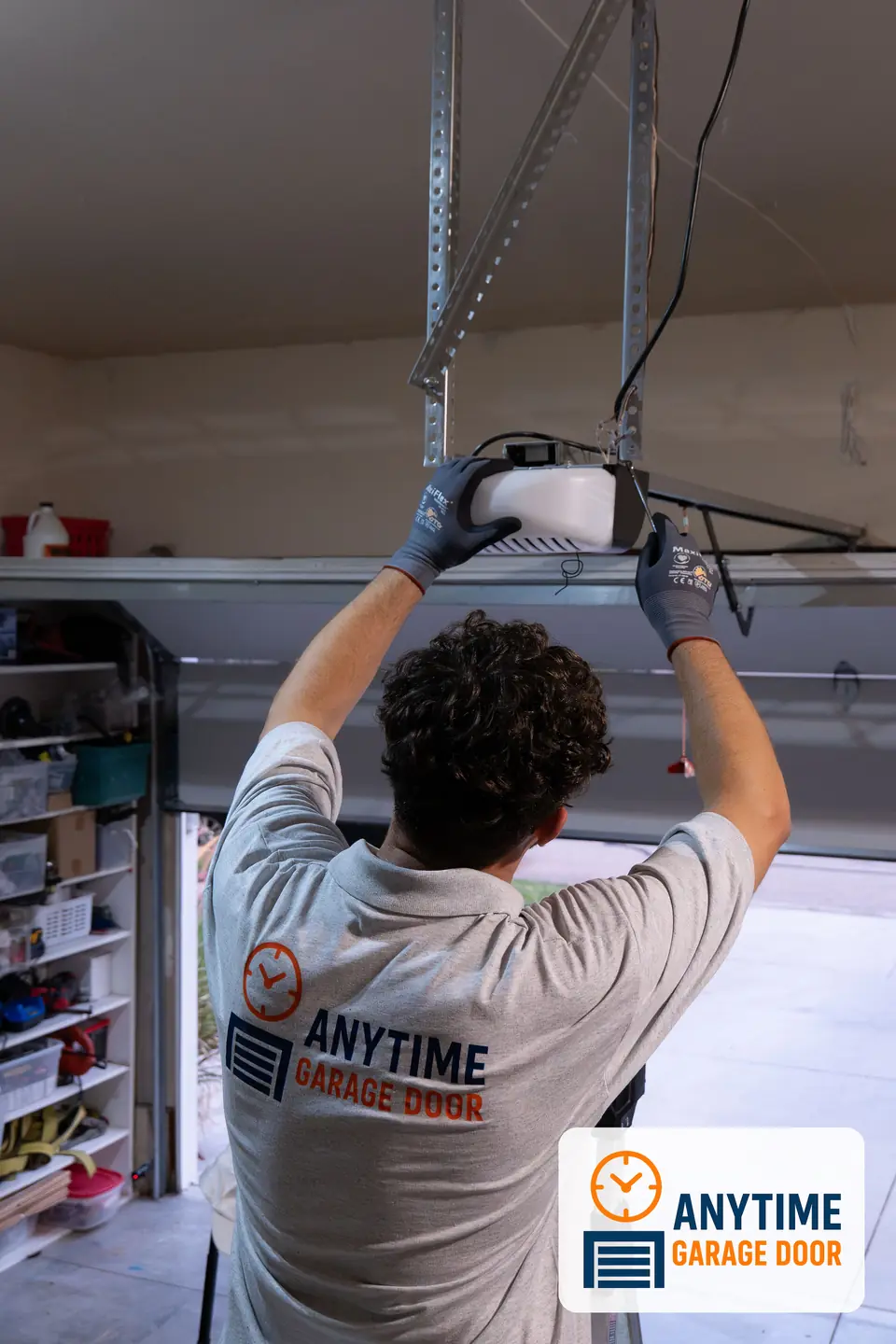
Opener installation means taking down the old unit if there is one, mounting the new motor and rail on solid framing, wiring the wall button and safety sensors, and setting the opener to your door. We mount the wall button high enough that small children can't reach it.
Before anything goes on the ceiling, we check the door itself. An opener is meant to steer a door that its springs already hold up, not to carry the weight on its own. Hook a new motor to a badly balanced door and it strains on every trip, so if the springs or cables need work, we tell you and price it first.
Never loosen, unwind or remove the springs or cables yourself, because they're wound under heavy tension. If your door hangs crooked, stop using the opener and keep everyone, including children and pets, out from under it.
Picking the right opener
Openers differ in the drive that moves the door along the rail, in how loud they run, and in extras such as phone control. Our opener buying guide compares the drive types side by side.
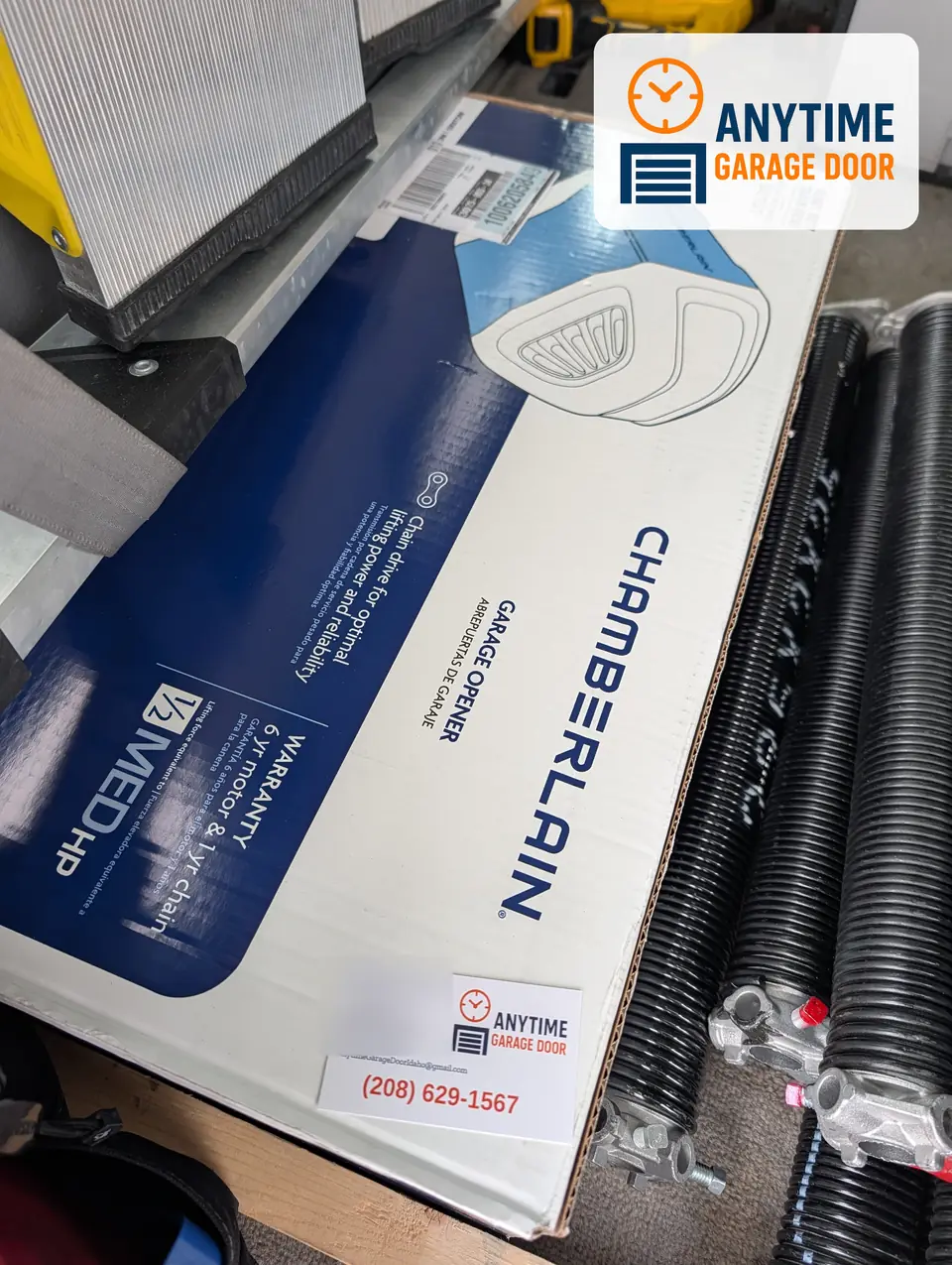
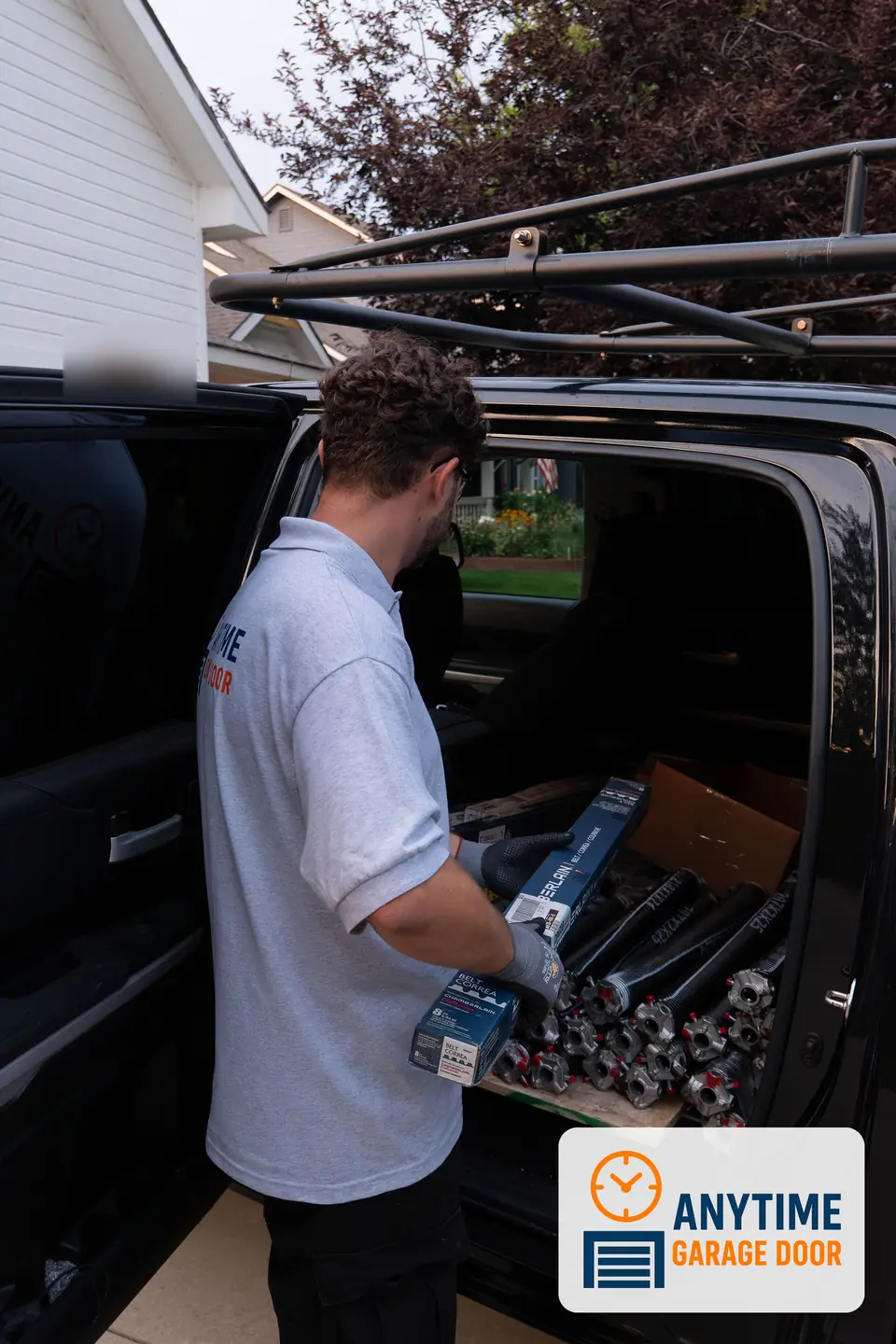
Many homes in newer Treasure Valley subdivisions came with a basic builder-grade opener that rattles the house every morning. The technician will show you the Chamberlain myQ models on the truck and help you pick one that suits your door, your ceiling and how often the garage gets used.
Safety sensors and force settings
Every opener we install gets a pair of safety sensors a few inches above the floor, one on each side of the door. One sensor aims an infrared light at the other, low across the opening. If a child, pet or bike interrupts that light while the door is coming down, the opener stops and reverses.
The force setting controls how hard the opener pushes before it reverses. We set it as low as your door allows, then confirm the door backs off when it meets an obstacle, using the board test described on our tune-up page. Turning the force up to push a sticky door closed is dangerous, and we won't do it.
Keypads, remotes and phone control
We program every remote you plan to use and mount a wireless keypad outside so family members can get in without a remote. Pick a code that isn't your house number or a birthday. If you want to use the button built into your car, mention it when you call; some cars need an adapter.
Chamberlain myQ openers can connect to your home Wi-Fi. With the app, you can see from your phone whether the door is closed and close it if someone forgot. If your Wi-Fi barely reaches the garage, let us know ahead of the visit.
New opener or repair the old one?
If your current opener still runs but acts up, it may only need a part or an adjustment; our opener repair page covers the common faults. Installing a new unit is the better path when you want something the old one can't give you: quieter running, an outdoor keypad, alerts on your phone, or safety sensors on an opener that never had them.
Getting a new garage door? We can install the opener as part of that job, so the door and opener are set up and tested together. Call (208) 629-1567 any time, and tell us your door size, your ceiling height and how many remotes you need.
How it works
- Check the doorWe test the springs, cables and balance so the new opener isn't fighting a heavy door.
- Mount and wireThe rail and motor go up, and the wall button and keypad are connected.
- Set sensors, limits and forceWe align the sensors, set where the door stops, and confirm the auto-reverse works.
- Walk you through itWe program remotes, set up the app, show you the emergency release and clean up.